Coaching, a recent addition to USAID’s professional development offerings, took on new significance when disaster struck the agency.
BY VICTORIA MITCHELL AVDIU AND BRYN SAKAGAWA
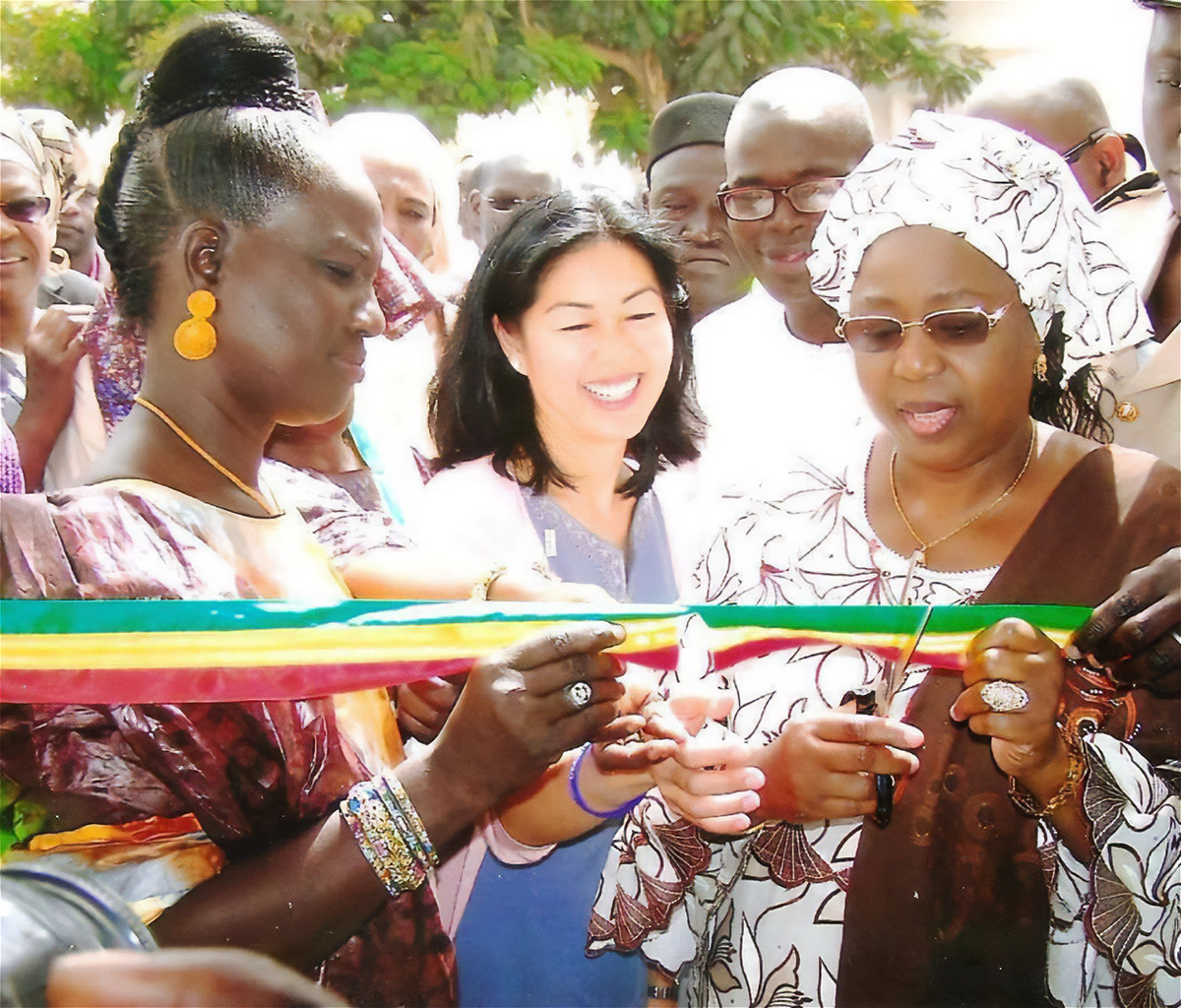
From right, Dr. Awa Marie Coll-Seck, an infectious disease specialist and Senegalese Minister of Health, opens a health facility in Dakar in 2013 with Bryn Sakagawa, center, then director of the USAID Senegal Health Office, and a colleague from the Senegal health sector.
ZACK TAYLOR / USAID SENEGAL
A senior USAID mission director sat across from one of us on a video call in Uzbekistan, visibly exhausted. She had spent months navigating a politically fraught program realignment overseas, managing a demoralized team while fielding pressure from Washington. She could rely on plenty of advisers and experts, but what she needed was space: a confidential, nonjudgmental conversation with someone who understood the complexity of her world. Over the course of several coaching sessions, we helped her find her own answers to the problems she faced.
Stories like these are what coaching made possible inside USAID. A 2024 global study by PricewaterhouseCoopers found that 80 percent of coaching clients reported improved self-confidence and 70 percent reported improved work performance. In the Foreign Service, where officers are working in complex foreign policy environments, these are significant outcomes. USAID’s internal coaching program, started in 2022, was relatively new in comparison to the State Department’s program, which had been operating since 2009. Former State Coaching Manager Jerry Wang described the State program as the department’s “best kept secret,” with 85 coaches serving more than 400 clients. This reinforced our belief that internal coaching had deep, untapped value across the foreign affairs community.
Development work is defined by ambiguity, and traditional training programs often failed to address the individualized, ongoing leadership challenges that staff faced in our missions. Coaching offered something different by providing a safe, confidential space, free from judgment, where harried professionals could step back from the relentless pace of their work to examine their situations from new angles. Rather than prescribing solutions, coaches practice what we call “holding up a mirror,” or helping clients see things from a different perspective.
For many of our colleagues, the value of working with an experienced colleague-coach, one who understood the context of development work precisely because they had navigated the same institutional complexities and frustrations, was immediately tangible. Coaching became the linchpin in USAID’s professional development offerings, complementing the Center for Professional Development’s existing training, mentoring, and leadership programs with something more personal and sustained.
When the agency was abruptly dismantled in early 2025, USAID internal coaches took action. We realized that coaching couldn’t address all our colleagues’ needs, but it was something we could do immediately to help them navigate a loss none of us had expected.
How It Started
In January 2022, the first cohort of approximately 25 employees began an intensive training program in coaching at Georgetown University’s School of Continuing Studies. The selection process was rigorous. Both of us were drawn to coaching for deeply personal reasons. One of us had spent 13 years as a Foreign Service officer and had gravitated toward informal coaching conversations with colleagues long before there was a name for it. The other had experienced transformation firsthand with the support of an executive coach who helped her recognize burnout and develop strategies to work through it.
Over the next three years, USAID invested approximately $750,000 to train three coach cohorts at Georgetown. The agency also trained Foreign Service National (FSN) coaches. By January 2025, the program included more than 75 U.S. direct-hire coaches and a comparable number of FSN coaches worldwide.
Almost anyone at USAID was eligible to request coaching, though clients typically included staff transitioning between positions, seeking new roles, or navigating major career or life changes. Some of the most senior leaders, including deputy assistant administrators in Washington and mission directors abroad, participated as well.
Development work is defined by ambiguity, and traditional training programs often failed to address the individualized, ongoing leadership challenges that staff faced in our missions.
We estimate that coaches provided between 1,500 and 2,000 hours of coaching over the program’s three-year run, reaching roughly 500 to 600 clients. It was a significant return on investment—contracted externally at market rates, those hours, alone, would have cost more than $2 million. And USAID coaches also trained their teams to use coaching techniques and created coaching and mentoring programs, laying the groundwork for a true coaching culture across the agency.
As the program grew, the impact showed up in ways both tangible and unspoken. Coaching helped surface blind spots that traditional training programs rarely addressed. Through sustained engagements, typically three or more sessions over several months, coaches could help clients identify patterns of behavior they couldn’t see on their own, develop individualized growth paths, and build strategies tailored to their specific circumstances. Sometimes our colleagues simply needed a confidential space to strategize and reflect on their leadership challenges, which could mean a single session to think aloud with a trusted partner.
Other times, the work unfolded over months, helping a colleague step into a new leadership role with greater confidence and self-awareness. We also experimented with barter coaching between ourselves, honing our skills while supporting each other. We were expanding into team coaching in early 2025, when DOGE entered the building, intent on destruction.
It Wasn’t Perfect
Not everything was working optimally, however. USAID made a significant upfront investment but hadn’t followed through in supporting coaches after that initial training. Continuing education, International Coaching Federation (ICF) membership, and credentialing costs fell on individual coaches. There was no formal structure for coaching supervision or quality assurance, and we lacked a robust way to measure the program’s impact beyond what individual coaches tracked with their own clients.
Further, many certified coaches were frustrated by low client intake; some went months after completing their Georgetown training without a single new client. In hindsight, the program needed far more aggressive marketing at all levels of the agency, including a sustained push in overseas missions.
These were growing pains, however, not fatal flaws. It wasn’t prudent to continue investing in training new cohorts of coaches when demand hadn’t caught up with supply, but the program certainly had room to grow. After all, it was just three years old; and we believe that, given time, it would have matured into something more like the Department of State’s coaching program.
With the dismantling of USAID in early 2025, the contractors who had managed the coaching program’s administrative infrastructure disappeared seemingly overnight. Within days, thousands of USAID contractors lost their jobs, followed in waves by direct-hire staff including members of both the Civil Service and Foreign Service who had dedicated their careers to international development.
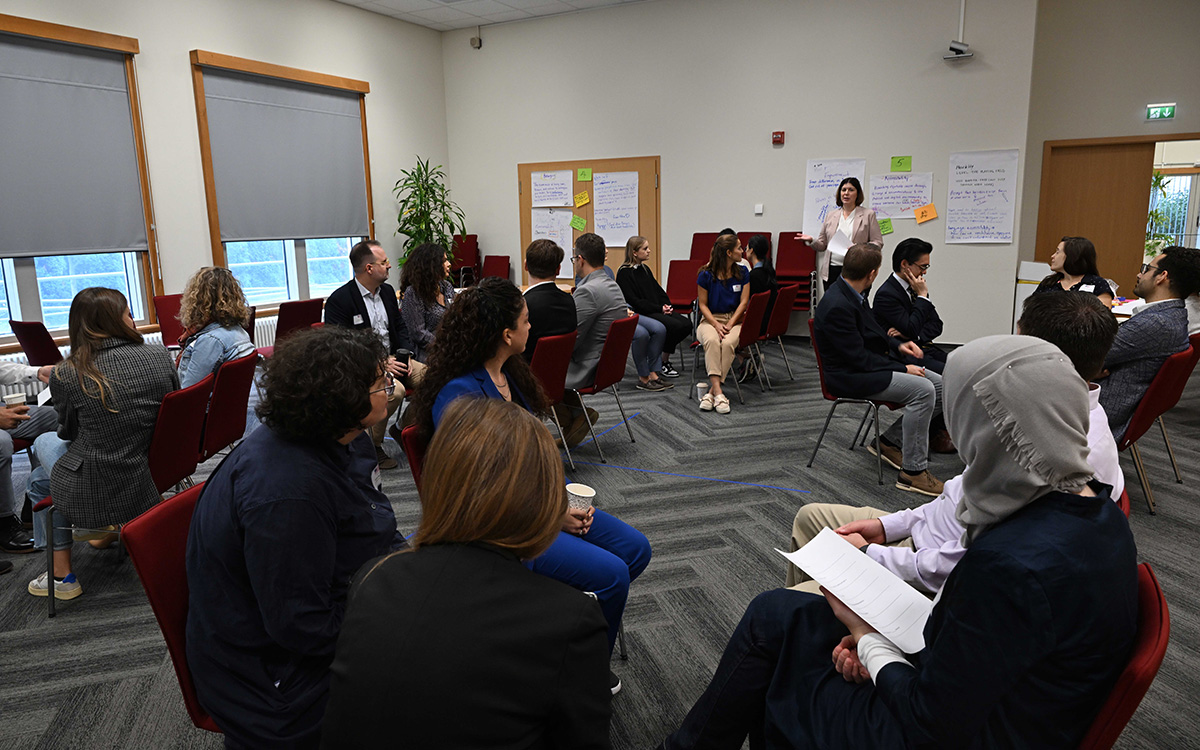
Victoria Mitchell Avdiu, then deputy director for international communications at USAID, facilitates a coaching training session for the Frankfurt Leadership Lab at U.S. Consulate Frankfurt in May 2024.
U.S. CONSULATE FRANKFURT
USAID Undone, Coaches Regroup
A small group of coaches who had been building an informal USAID coaching community came together to ask a simple question: What can we do? As we watched the entire U.S. development infrastructure being systematically dismantled, we realized our colleagues needed a safe space to process their grief, which we were uniquely positioned to provide. By March 2025, as reports emerged that DOGE had installed artificial intelligence tracking on agency communications, USAID’s internal systems were no longer safe spaces.
We organized outside the agency, creating an external system to match USAID certified coaches with current and former staff who needed support. We advertised through numerous channels, and the response was overwhelming: 75 coaches stepped forward to support more than 250 clients in those early months. One client noted that their coach helped them “regain clarity and confidence, turning fear into focused leadership.”
In September 2025, we formalized the effort and rebranded as “AID Coaching.” More than a name change, it was a deliberate professionalization of the volunteer collective. We required all coaches to adhere to ICF ethics standards and document their ICF-accredited training. We also instituted formal client-coach agreements and developed a structured framework for pro bono career transition coaching. We began offering drop-in hours, biweekly skill-building sessions, and coaching supervision with a Professional Certified Coach. We also implemented feedback collection from clients and conducted a “pause and reflect” exercise to assess our own effectiveness, which is exactly the kind of rigorous self-evaluation that the original USAID program had lacked.
USAID’s internal coaching program, started in 2022, was relatively new in comparison to the State Department’s program, which had been operating since 2009.
Today, AID Coaching has nearly 65 certified coaches and has added 290 clients since the rebranding. In late July, the International Coaching Federation named AID Coaching as one of the finalists for the 2026 IFC Coaching Impact Awards. AID coaches agree to provide three pro bono coaching sessions for up to three clients a year. Clients may be former USAID employees or other mission-driven professionals. After three sessions, coaches and clients may opt to continue coaching and negotiate rates on their own.
Many of these clients are navigating deep grief and confusion about what happened to the agency and the futures they had planned. They are processing the loss of professional identities built over years or decades of service. Alongside that emotional work, they are seeking concrete tools for job searching and career transition, support that blends traditional coaching with career consulting to meet them where they are.
Lessons Learned
USAID was building an internal capacity to help its professionals tackle the world’s most complex development challenges with greater self-awareness, resilience, and adaptability. That institutional investment was cut short. But our experience offers several lessons for any agency or organization considering building similar internal coaching capacity. First, market the program relentlessly so that demand matches supply and invest in your coaches’ continuing education and professional development from the outset. Also, build data collection and impact measurement into the program from day one, establish coaching supervision and quality assurance structures early, and don’t scale the supply of coaches ahead of demonstrated demand.
Ultimately, though, this story is about what endures. USAID invested in its people, and that investment has outlived the institution. The skills, the relationships, and the commitment to service didn’t disappear when the agency did. They found a new form in AID Coaching, which exists because dozens of professionals refused to let that capacity atrophy when their colleagues needed it most.
Former USAID Foreign Service Officer Jaime Oberlander, in partnership with OneAID, conducted a study aimed at documenting the human impact of the dismantling of USAID and found that more than a year later, just 40 percent of survey respondents reported securing full-time employment (see article here). That is why AID Coaching continues to show up, offering support to development professionals.
To learn more about AID Coaching or request a coach, go to https://www.aidcoaching.com/.

Victoria Mitchell Avdiu is a writer, leadership coach, and retired USAID Foreign Service officer who served in eight countries over 16 years, including as country director for Belarus. Her writing has appeared in The Washington Post and The Foreign Service Journal. She lives in Paris. Find her at https://vlmitchell.com.

Bryn Sakagawa is an executive and leadership coach, co-founder of AID Coaching, and retired USAID Foreign Service officer. During her 20-year career, she helped deliver health and development results in low- and middle-income countries across Asia, Africa, and the Middle East. She lives with her family in Ottawa. Find her at https://apulitconsulting.com.
When sharing or linking to FSJ articles online, which we welcome and encourage, please be sure to cite the magazine (The Foreign Service Journal) and the month and year of publication. Please check the permissions page for further details.
Read More...
- “On the Work Force Rollercoaster at USAID” by Shawn Zeller, The Foreign Service Journal, April 2004
- “Impacted by the USAID Job Cuts in 2025? Check Out These Resources” by Rebecca L. Root, Devex, December 2025
- “US(AI)D: What Launching AI Tools for Communicators Taught Us” by Victoria Mitchell Avdiu and Michelle (Staley) Swain, The Foreign Service Journal, May-June 2026