Reflections
BY BRAD SWANSON
In my job managing private equity investments, I have often seen good people at the head of corporations do bad things. But as I was researching examples of corporate amorality for a book I was writing, I was surprised to find echoes of myself, many years ago, as a neophyte political officer in Monrovia.
The cases I highlight in my book are disheartening, to say the least. Knowing that smoking causes cancer, the tobacco industry created a spurious research organization that undermined real science for many years, casting doubt in the minds of smokers and leading to millions of needless deaths.
Oil industry scientists discovered, decades before the public, that greenhouse gases would cause catastrophic climate change if unchecked, but executives suppressed the evidence and colluded in a plan to deny the role of human activity in global warming.
At my desk one day, pondering how responsible citizens could direct such malignant activity with a clear conscience, my eyes lit on a framed certificate hanging on the wall—complete with the autopen signatures of President Ronald Reagan and Secretary of State Alexander Haig Jr.—appointing me to the exalted position of vice-consul in Liberia in 1981. The penny dropped.
I was a young man in my first assignment as a political officer, eager to dive into my principal task of understanding how Liberians felt about their government in the wake of a bloody coup a few months earlier that had left a group of thuggish noncommissioned officers in charge of a shaky state.
In the absence of a free press or public organizations, my main sources of information were my own contacts, and I set about establishing an informal network of Liberian friends and associates.
Building relationships was easy. Despite the uneasy atmosphere created by casual violence and widespread corruption, Liberians from all walks of life were open with me, not least because America was seen by all as the guarantor of the country’s stability, and by many as its ultimate savior, given the historic links between the two countries since Liberia’s founding by the American Colonization Society in 1822.
The Local Consensus
It did not take long for me to absorb, and join in, the overwhelming consensus outside the high walls of the embassy compound that despite dropping their guns and dressing in suits, the coup-makers had neither the skills nor the temperament to develop into responsible leaders, and that none of them would ever willingly leave power, including their senior ranking member, Master Sgt. Samuel Doe, who had emerged as primus inter pares.
But our government had decided that Liberia could be moved to democratic, civilian rule in a relatively short period. A hard-charging ambassador, William L. Swing, led the U.S. mission in an energetic and tightly coordinated campaign to lay the groundwork for free elections.
(I will never know whether Amb. Swing, who died in 2021 after a highly distinguished career, was personally a partisan of this policy or simply a good team player; but I will always be impressed by the drive and discipline he showed in accomplishing whatever he set his mind to.)
But I was not just feigning loyalty to a misguided policy. At one level I believed what I was saying, even while at a deeper level doubt festered.
I raised concerns early on inside the embassy but soon realized they had little chance of standing up against the juggernaut that had started to roll. I began self-censoring my reporting, which centered on domestic political developments. And then, buoyed by the positive feedback I was getting both from colleagues in the embassy and headquarters, I began self-censoring my mind.
I look back now on the stupefaction and, at times, anger of my Liberian acquaintances. My own words sounded hollow to me as I argued back to them that the U.S. plan was working, just give it time. But I was not just feigning loyalty to a misguided policy. At one level I believed what I was saying, even while at a deeper level doubt festered.
It was not until I left the hothouse of Liberia in 1984 to begin a tour in Washington, D.C., that I regained an equilibrium of judgment. I had been excited to learn that I would receive a Superior Honor Award for my work in Liberia, but by the time the ceremony took place I had already started to feel a deep discomfort.
Hearing the words of the citation—“His work in support of Liberia’s transition to constitutional government has been a central feature of United States assistance to Liberia”—I felt shame, not pride.
A Case of “Groupthink”
As we know, my Liberian contacts were dead right and we were dead wrong. Throwing off U.S. attempts at persuasion, Doe fraudulently elected himself president in 1985, and his misrule drove Liberia ever deeper into chaos, until a civil war broke out four years later that continued off and on for a generation, bringing unimaginable violence, devastation, and hardship to the country.
What I experienced was a classic case of “groupthink,” where members of a circle of insiders who feel challenged by outsiders tighten ranks, subordinate personal values to those of the leadership, invent ever-more-strained rationales for their behavior, and compartmentalize their thinking, so they can continue to believe in their own moral good, despite taking actions that they might otherwise reject.
Groupthink is part of the human condition. In some circumstances, hanging together might make the difference between life and death. But in everyday life, the stakes are almost never that high.
Many people in my industry, socially responsible investment, see ethical failure on a massive scale in the corporate world and blame executives. Given my experience, I am not so judgmental. But I do feel that we can learn to recognize, and counter, groupthink.
Hopefully we can all become sufficiently self-aware and self-confident to do the right thing when the moral gain of standing apart from the group outweighs the cost of leaving it.
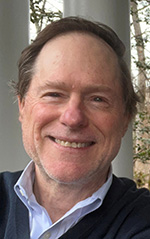
Brad Swanson was a U.S. Foreign Service officer from 1979 to 1986, serving overseas in Senegal and Liberia, and in Washington, D.C., as desk officer for Kenya and Uganda. He is the author of Profit vs. Progress: Why Socially Responsible Investment Doesn’t Work and How to Fix It (MIT Press, 2026).
When sharing or linking to FSJ articles online, which we welcome and encourage, please be sure to cite the magazine (The Foreign Service Journal) and the month and year of publication. Please check the permissions page for further details.