As administration officials were busy dismantling USAID back in Washington, one USAID family was under attack in DR Congo, their home overrun by rioters.
BY JOHN DUNLOP
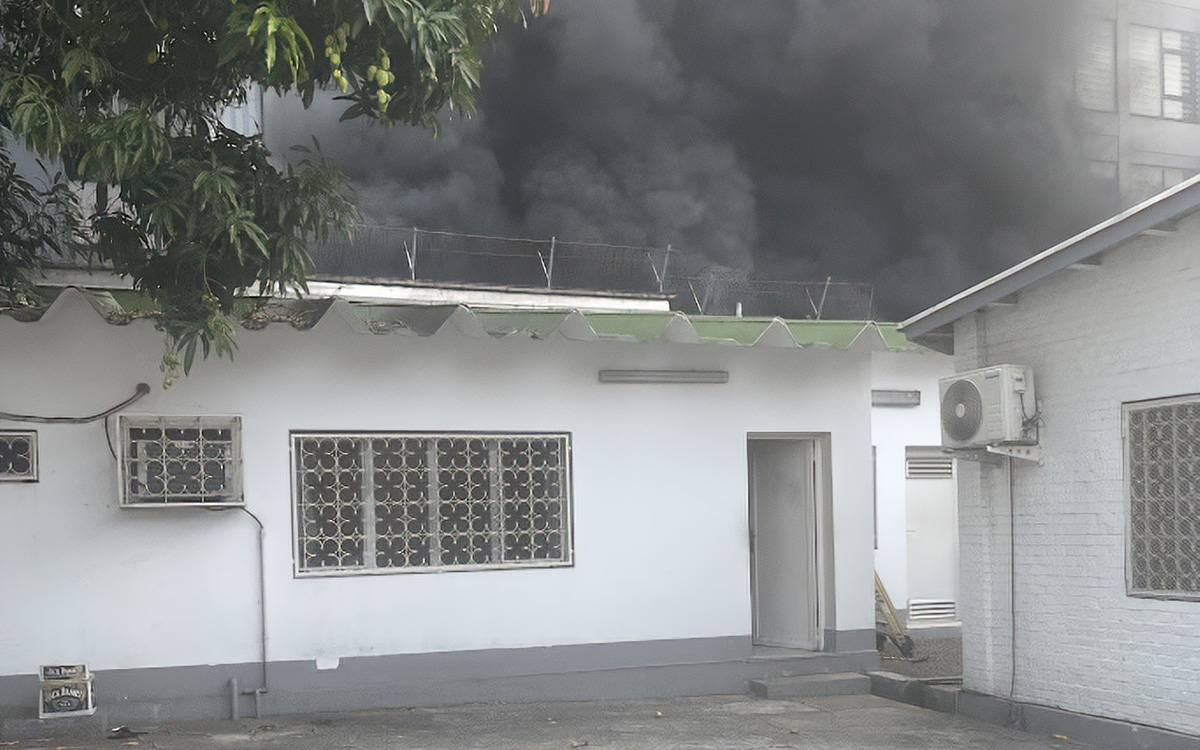
Fires burning outside the author’s residence in DR Congo on January 28, 2025.
COURTESY JOHN DUNLOP
The fall of Goma in 2025 did not come as a surprise. For months, the M23 insurgency had been tightening its grip on eastern Congo, seizing large portions of North and South Kivu provinces and slowly, methodically encircling the city. By the end of 2024, Goma, the largest city in eastern Democratic Republic of the Congo (DR Congo) and the economic and political heart of the Great Lakes region, was surrounded. As the new U.S. administration prepared to assume office, M23 seized the opportunity and took the city. For the international community, it was a red line crossed. For the people and government in Kinshasa, a thousand miles to the west, it was a humiliation. The easiest option was to deflect blame to the international community.
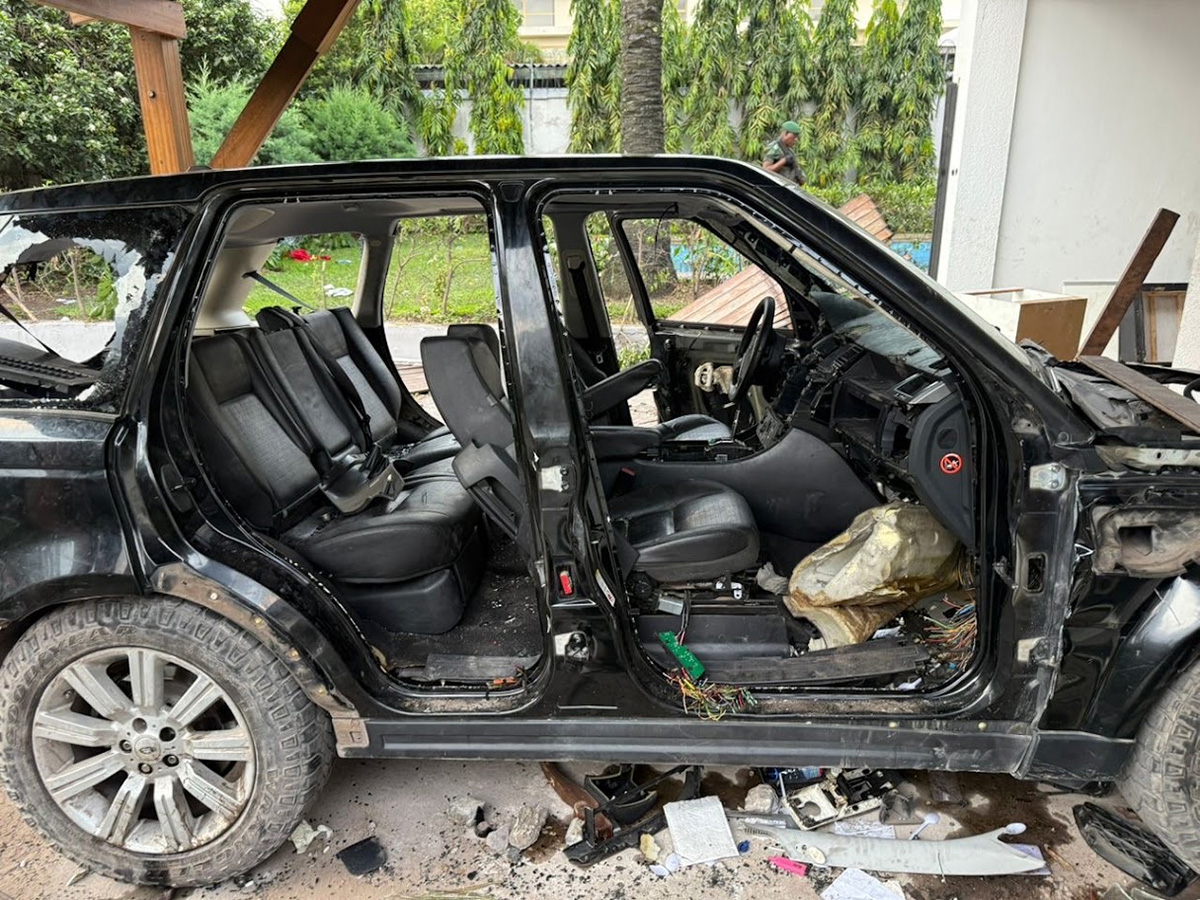
The author’s car, after the attack on the residence.
COURTESY JOHN DUNLOP
Protests were called for January 28. U.S. Embassy Kinshasa issued advisories to all staff that unrest was possible. By the early morning hours on that day, it was already clear that whatever was coming would be far worse than anticipated. Staff traveling to work were told to turn around. Those already at embassy or USAID facilities were instructed to shelter in place. Children on their way to school were sent back home.
My wife, Angelique, and I sheltered at our residence, the USAID mission director’s house in the Gombe district of Kinshasa. Our compound shared a wall with a commercial building that several years prior had housed the Rwandan embassy, but that embassy and its staff had long since departed. It did not matter.
By 7:30 in the morning, crowds had gathered in front of that building and throughout the neighborhood, chanting, throwing rocks, and burning tires in the street. By 8 a.m., we could hear the crowds outside, and not long after, we smelled tires burning and heard explosions just outside the walls. By late morning, protesters entered the former embassy building and began looting it.
Throughout the morning, I was in continuous contact with the regional security officer (RSO), providing updates and receiving guidance. The assessment we reached together was straightforward: Stay inside, keep quiet, do nothing to draw attention to the residence. At that point, the house did not appear to be a deliberate target. Rocks occasionally cleared the compound wall, but the crowds seemed focused next door. We sheltered in place and waited.
By midday, something shifted. The noise outside began to diminish. I called the embassy and reported that conditions around the residence appeared to be stabilizing. What had been an “8” on the urgency scale had diminished to a “4.” I believed the worst had passed.
I was wrong.
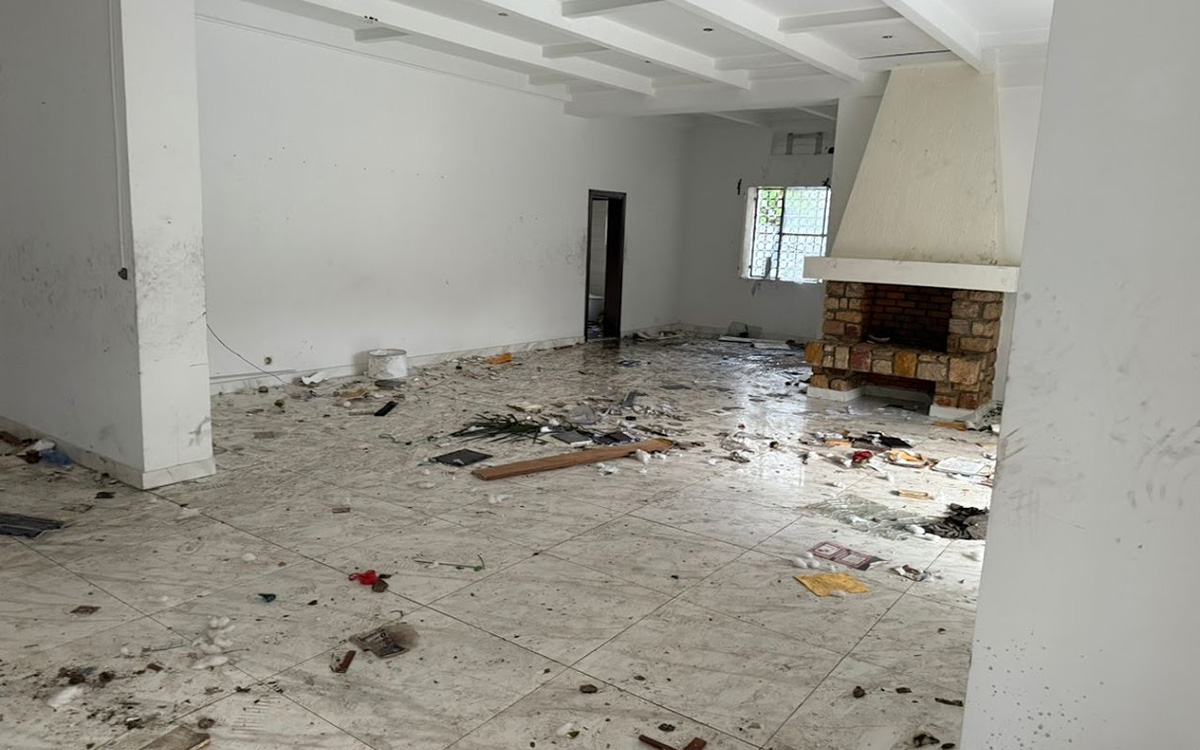
Looters emptied the entire house of its contents, leaving nothing behind.
COURTESY JOHN DUNLOP
A Rain of Rocks on the Roof
At approximately 1 p.m., I heard rocks striking the roof—not stray debris but deliberate impacts, and from a different direction, a side street where only our house faced. I looked outside and understood immediately: The rocks were being aimed at us. Over the next 15 minutes, the barrage steadily intensified. The windows of my car shattered. The exterior of the house took visible damage. As I watched from inside my own home, the driveway gates began to sway violently back and forth.
A gate giving way does not happen all at once. The hinges strain. The frame bows. The whole structure swings back and forth under external pressure, and you stand on the other side knowing there is nothing you can do. Within minutes, the gates collapsed. The compound was breached, and what seemed to be hundreds of people were streaming into the compound. The situation had changed shockingly suddenly, but it was clear we needed evacuation immediately. I knew what that request meant and had discussed it earlier with the RSO—leaving would almost certainly mean losing everything inside. But there was no other choice.
Angelique and I moved to the safe haven area of the residence and called the RSO. The rioters had not yet come through the door of the house itself, but they were everywhere outside, on the grounds, moving through the outbuildings, taking whatever they could carry. This may sound silly, but I had borrowed the ambassador’s warming trays for a reception we had hosted a few nights earlier, and they were sitting outside waiting to be returned. They were one of the first things to be stolen. “I’m not gonna hear the end of that,” I thought.
The RSO dispatched an assistant RSO and a SPEAR team—a specially trained unit of local police seconded to embassy protection—in an armored vehicle. They arrived approximately 20 minutes after the gates fell, cleared the compound of looters, positioned the vehicle at the gate, and pounded on the door. We came out of the safe haven, taking our dogs, “go bags,” and almost nothing else, climbed into the armored van, and fled.
Angelique, a survivor of the Rwandan genocide, was severely retraumatized. As we huddled in the safe haven, she knew they were coming for her.
As we drove away, I watched through the window as the crowd that had been waiting outside surged back through the gates. Video footage later shared on social media, filmed from an apartment building overlooking our compound, showed the looting continuing for hours. In some of that footage, you could clearly identify Congolese police officers among the crowd. They were not intervening. They were taking.
A subsequent visit to the property confirmed what we had feared. The residence and all the outbuildings had been stripped to bare walls. The light fixtures and electrical sockets had been ripped out. Every piece of furniture, every appliance, every piece of clothing we owned (my beloved suits!) had been taken.
But the detail that stayed with me most was what they had done to access the safe haven. They had sledgehammered through a cement wall, a process that must have taken at least an hour and required equipment brought to the site for exactly that purpose. They had also climbed to the roof and broken in through the ceiling, leaving dirty footprints on the wall of our bedroom from ceiling to floor as they climbed down.
That detail brings me to the hardest part of this account.
A Targeted Attack
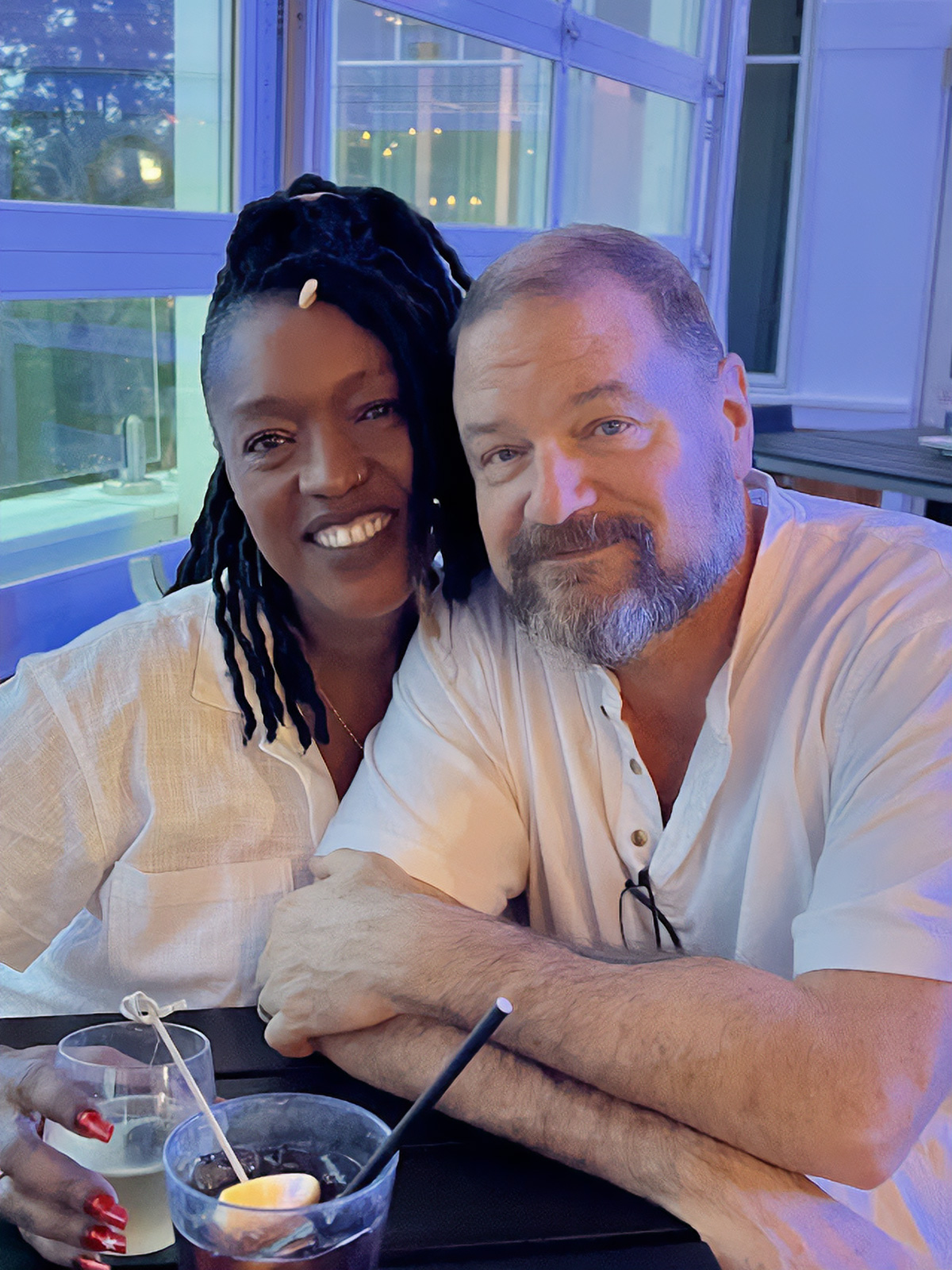
The author and his spouse, Angelique.
COURTESY JOHN DUNLOP
In the days that followed, multiple sources, people with no connection to one another, independently reported to us that Angelique and I had not simply been caught in the chaos of a city coming apart. We had been targeted. My driver and our local security guard, both inside the compound when the gates were breached (and, in my mind, heroes), told me that the first words shouted by the first people to enter were: “Where is the Tutsi?” That was a direct reference to my wife: Angelique was born in Rwanda but had been a U.S. citizen for 30 years. Friends of Angelique in Kinshasa, including our landlord, separately told her they had heard about a specific plan: to kill me first, and then to rape and kill her.
To our knowledge, no other personal residences were specifically targeted in Kinshasa that day. And other than much-appreciated and heartfelt expressions of sympathy from the acting USAID assistant administrator and the U.S. ambassador, there has been no formal communication from USAID Washington or the State Department acknowledging that the attack took place.
I filed the standard loss report and was reimbursed at roughly fifty cents on the dollar. The Congolese government also eventually contributed some restitution. But the arithmetic of reimbursement forms misses the point entirely. What we lost that afternoon cannot be captured on a spreadsheet. Among the things taken from that house were the only known photographs of Angelique’s parents. Those images existed nowhere else in the world. They are simply gone. So are 30 years of personal and professional records, family documents, and the accumulated material evidence of a life lived together, a family. Angelique, a survivor of the Rwandan genocide, was severely retraumatized. As we huddled in the safe haven, she knew they were coming for her. No reimbursement formula reaches any of that.
The next morning at 2 a.m., the evacuation of all nonemergency staff and families began. Angelique was evacuated across the river to Brazzaville, her eyes still glassy with shock, while I stayed behind to help manage the crisis. I still clung to the illusion that there was a program to be run.
I have served the American people for 28 years with USAID, much of that time in difficult and high-threat postings. I believe deeply in our work, in our calling. And the hardest chapter, harder in some ways than the day the gates gave way, was what came after.
A Painful Return
Approximately one month following the attack, I evacuated to Brazzaville, and then on to the United States. Three months later, I returned to the DR Congo. Not to rebuild. Not to continue the mission. I returned to shut it down.
With my deputy mission director and deputy executive officer, I spent May through July 2025 overseeing the closure of a $1.3 billion annual USAID program for the Central Africa region—negotiating separation agreements, shuttering mission facilities, supervising pack-outs, and looking approximately 250 Congolese and regional staff in the eye as I told them their jobs were gone.
These were people who had worked alongside us with dedication and professionalism. The losses among our contractors and grantees were incalculable. USAID programming had almost certainly been one of the largest employers in the country. Closing it was the final chapter of my Foreign Service career, and it was among the most painful things I have ever been asked to do.
When U.S. diplomats are attacked, when there is credible evidence of a plot to kill them, the government they serve owes them an accounting.
Angelique and I know we are fortunate to be alive, and we know how close the margin was. We also acknowledge the legitimacy of the question: “Why was Angelique even there?” We can only say that while we took precautions, we had never had the slightest whiff of a threat or hostility toward her. We had lived in other tough places.
I am not writing this in search of sympathy. I am writing this because it deserves to be on the record and because the absence of any apparent reckoning at the center of this story begs explanation.
When Ambassador Chris Stevens and three other Americans were killed in Benghazi in 2011, the U.S. government responded with extensive investigations, congressional hearings, and years of public scrutiny. Whatever one thought of how that process unfolded, the principle behind it was sound: When U.S. diplomats are attacked, when there is credible evidence of a plot to kill them, the government they serve owes them an accounting. The evidence in this case, though clearly anecdotal, points toward a planned and organized attempt to assassinate a senior U.S. diplomat and his wife while they were posted abroad in service to the United States.
We escaped. But we escaped by minutes, and not by design. There is no doubt in our minds that if we had stayed in that house much longer, we would have been killed. I close by thanking the assistant RSO and his team who came to our rescue. They saved our lives, and for that we are eternally grateful.

John Dunlop was the USAID mission director in the Democratic Republic of the Congo and Central Africa region when this story took place. He began his Foreign Service career as a health officer and has served in multiple countries including Kenya, Tanzania, Rwanda, Madagascar, Jordan, Iraq (two tours), and Afghanistan. He is a two-time recipient of the State Department Award for Heroism. Dunlop retired from USAID in September 2025 as a minister counselor.
When sharing or linking to FSJ articles online, which we welcome and encourage, please be sure to cite the magazine (The Foreign Service Journal) and the month and year of publication. Please check the permissions page for further details.
Read More...
- “When Criticism Falls on Deaf Ears: The Case of U.S. Foreign Aid” by Thomas Dichter, The Foreign Service Journal, November 2017
- “Reflections on the U.S. Embassy Bombings in Kenya and Tanzania,” The Foreign Service Journal, July-August 2018
- “A USAID Official Escaped Violence in Congo. He Returned Home to a Different Crisis” by Lucien Bruggeman, ABC, March 2025