Speaking Out
BY LYNN NORTHCUTT VEGA
Speaking Out is the Journal’s opinion forum, a place for lively discussion of issues affecting the U.S. Foreign Service and American diplomacy. The views expressed are those of the author; their publication here does not imply endorsement by the American Foreign Service Association. Responses are welcome; send them to journal@afsa.org.
When I arrived at the USAID mission in Nicaragua in 1991, I believed I was witnessing the beginning of a lasting democratic transformation. Thirty-five years later, after watching much of what Nicaraguans and the international community worked so hard to build completely unravel, I have come to question what we understood, and what we missed, about building a democracy that could endure.
These questions have particular relevance today in many countries, including the United States, and a close examination of those defining moments in Nicaragua’s history might help us grapple with our own future and the future of the many countries in which we work to promote democratic values.
Democratic Statecraft Comes to Nicaragua
Violeta Chamorro had defeated Daniel Ortega in the historic 1990 election, ending a decade of Sandinista rule. Nicaragua had been devastated by revolution, civil war, economic collapse, and deep political divisions. With Chamorro’s victory, there was now a palpable sense of possibility and tremendous optimism.
Nicaraguans who had fled the country were returning home, determined to rebuild their country. They were joined by diplomats, development professionals, economists, governance specialists, humanitarian workers, and public administration experts from countries around the world, the Organization of American States, the United Nations, international financial institutions, and countless nongovernmental organizations.
We understood that an election alone did not create a democracy. All of us worked with our Nicaraguan counterparts to strengthen the National Assembly and courts, professionalize public administration, improve local governments, support civil society, and increase transparency.
But democratic development extended far beyond national institutions. Because democracies also depend on educated and healthy citizens who have economic opportunities and confidence that government can respond to their needs, we built it in both directions—from national institutions downward and communities upward.
So we trained mayors and city council members to govern more effectively and respond to their constituents. We helped civic organizations learn how to identify community needs, advocate for them, and hold the new government accountable. This expanded to schools, universities, health systems, and businesses.
Democratic statecraft in its broadest sense was being exercised.
Realizing a Shared Future
I remember visiting a cooperative of widows in the mountains of Jinotega. Their husbands had died fighting on opposite sides of the war. Instead of remaining divided, they came together to rebuild their lives and communities.
This kind of reconciliation among people who had decided that their shared future ultimately mattered more builds democracy at its most basic level. Democratic transitions are ultimately about relationships. Constitutions can establish rules and elections can transfer power, but societies emerging from conflict must also rebuild trust.
Another memory takes me to the Río Coco, where we traveled by canoe to deliver new Azul y Blanco textbooks to isolated schools. With U.S. government support, Nicaragua had developed these textbooks and trained teachers to use them.
Instead of being filled with revolutionary slogans and images of rifles, machine guns, and grenades, the books helped young children count with fruit and other everyday objects, and their lessons emphasized family, cooperation, respect, and citizenship. It was clear we weren’t merely replacing textbooks. We were investing in the successor generation of citizens.
Weathering a Storm That Didn’t Pass
Seven years after this work began, in 1998, Hurricane Mitch struck.
The storm devastated much of Central America. In Nicaragua, torrential rains triggered the catastrophic collapse of part of Volcán Casita, burying entire communities and killing thousands.
In the immediate aftermath, I traveled there with colleagues. I remember standing silently on hardened mud, children’s toys, shoes, scraps of clothing, and other remnants of ordinary lives scattered across it.
For years, we worked in those communities, and now the people we had known and the clinics and cooperatives we had supported were gone.
We knew we had to begin again.
And we did.
The international community and our Nicaraguan counterparts redoubled our efforts. Roads, bridges, schools, clinics, homes, and water systems were rebuilt. We continued investing in education, local government, public institutions, civil society, health, and economic opportunity.
This seemed at the time to be another sign of the country’s democratic resilience. But now I believe we misunderstood where Nicaragua was in its democratic journey.
Yes, we had strengthened institutions, and the laws and policies intended to make them function. We had trained public servants, teachers, judges, local officials, and community leaders. Even ordinary citizens had learned to advocate for their communities and demand accountability.
Those accomplishments were genuine and should not be diminished simply because we know what happened later.
But, at some point, we began to act as though much of the democratic transition was complete, believing that Nicaragua had reached an actual milestone.
That milestone, though, was artificial: Funding declined. The crowds of international experts thinned. Experienced advisers rotated to other assignments. Governments and international organizations confronted new crises elsewhere.
That is typical in foreign affairs and development. Resources are finite. Priorities change. Foreign Service officers rotate. Projects close. But perhaps we allowed the rhythms of our own institutions to shape the way we understood Nicaragua’s democratic development.
We measured progress in stats: in three- and five-year strategies, project evaluations, laws passed, institutions strengthened, people trained, and programs successfully completed.
Playing the Long Game
History uses a different measure. It asks whether institutions, and the people entrusted with them, remain independent and resilient 10, 20, or 30 years later.
Daniel Ortega understood this. After losing power, he did not abandon his political ambitions. Over the years, he was able to place loyalists in the very institutions intended to provide checks on political power: the Supreme Court, the Supreme Electoral Council, the National Assembly, and other parts of the state.
He did not need to abolish those institutions. They remained—but their independence gradually disappeared.
This is where the contrast in time horizons becomes particularly important. Ortega pursued a consistent political strategy across decades. Meanwhile, U.S. administrations changed, congressional majorities shifted, foreign policy priorities evolved, and funding and international attention rose and fell.
Ortega’s long game reminds me of Fidel Castro’s in Cuba, where he consolidated political power over decades, building a system that could endure changing circumstances and shifting international pressures.
Today, Nicaragua too has returned to authoritarian rule. Independent media and civil society have been severely restricted. Political opponents have been imprisoned or forced into exile. Institutions that once offered hope of democratic consolidation have come under government control.
This is not a criticism or even the fault of the dedicated professionals who worked in Nicaragua or of the programs themselves. I remain enormously proud to have been part of that effort.
But democratic consolidation does not follow a project calendar.
Building a court is one thing; maintaining a bench of judges committed to its independence is another.
Passing an electoral law can be difficult; developing a political culture in which candidates accept losing elections is much harder.
Training mayors and council members is important; continuing to elect local leaders who regard public office as a public trust is even more so.
Democracy extends across generations. Children have to learn it. Communities to practice it. Citizens have to participate in it. Public servants have to administer it. Courts have to protect it. Political leaders have to respect it.
And then the cycle must begin again with the next generation.
Looking Back to Look Forward
Knowing the outcome makes it tempting to look back and declare the democratic development efforts of the 1990s a failure, but that would be a mistake.
The progress was real. Lives were improved. Communities grew stronger. Institutions became more capable. Citizens gained a greater voice in government.
The more useful lesson here is also a humbling one: We confused progress with permanence. Democracy, in reality, is never complete.
Perhaps we needed to think less about when Nicaragua’s democratic transition would be complete and more about how it could be sustained across generations. We needed institutions, laws, policies, and resources, but we also needed people committed to protecting them. And we needed that commitment to endure from one generation to the next.
That lesson has stayed with me. As I watch democratic institutions come under strain in countries around the world, including our own, I find myself returning more often to what Nicaragua taught me: Democracy is not self-sustaining. It depends on people willing to uphold the rule of law, accept the legitimacy of elections, tolerate opposition, protect independent institutions, and place those institutions above individuals and political parties.
Today’s circumstances are of course different, and easy comparisons should be avoided. But I am far less willing today to assume that long-established democratic institutions—including our own—are inherently secure. No democracy can afford to take its institutions, or the people and norms that sustain them, for granted.
We made extraordinary progress in Nicaragua. But progress was not permanence, and with democracy, there is no finish line.
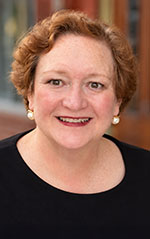
Lynn Northcutt Vega served as a career Foreign Service officer with USAID in Nicaragua, Honduras, Jamaica, Colombia, and Moldova. Since retiring in early 2024, she has been the representative of the Choctaw Nation of Oklahoma in Washington, D.C. She currently co-chairs a well-known discussion group on Latin America and the Caribbean in Washington, D.C., and is an occasional editorial writer for the Sun Sentinel and the Orlando Sentinel, sister newspapers in Florida.
When sharing or linking to FSJ articles online, which we welcome and encourage, please be sure to cite the magazine (The Foreign Service Journal) and the month and year of publication. Please check the permissions page for further details.
Read More...
- “Nicaragua: Revolution and Restoration” by Richard E. Feinberg, Brookings, November 2018
- “Diplomacy and Democracy: Putting Values into Practice” by Michael J. Abramowitz, The Foreign Service Journal, January-February 2021
- “Operation Nica Welcome” by Kate Applegate, The Foreign Service Journal, December 2023