Reflections
BY JONATHAN B. RICKERT
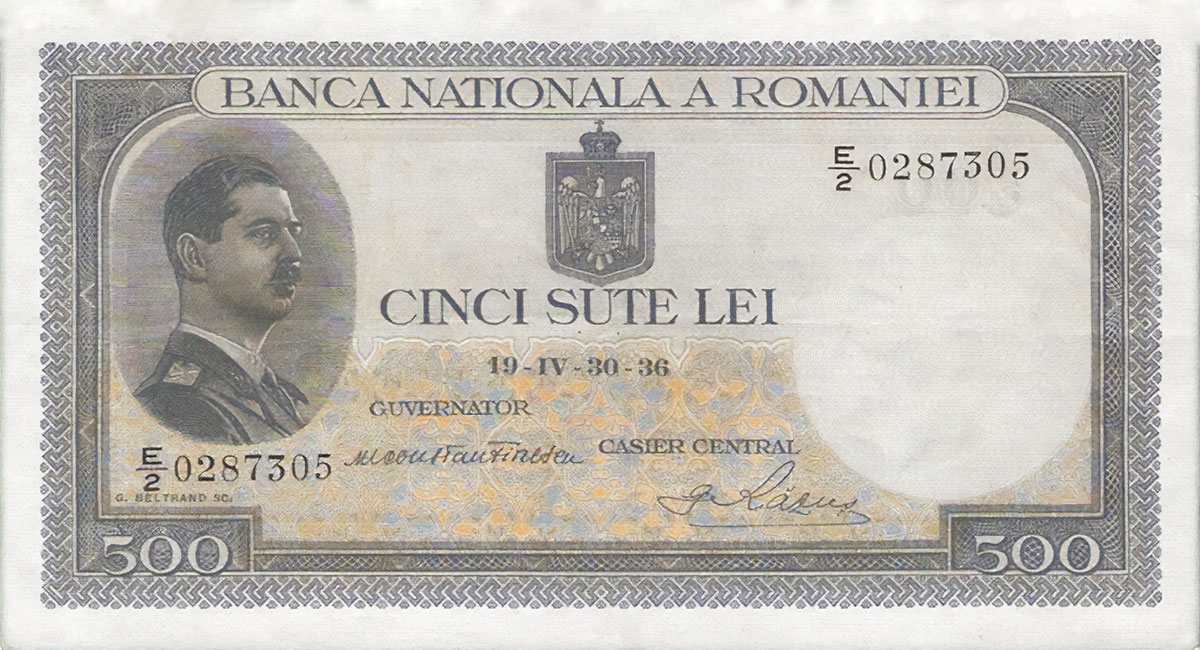 An old 500 Lei banknote like the one Lucien Horowitz gave the author’s son.
The imposing, Italianate-looking residence where my family and I lived during our second tour in Bucharest, at 2 Strada Ing. Ermil Pangratti, had been occupied by U.S. government representatives since 1948. The United States rented it first from the owners and then, after it was nationalized in 1950, from the Romanian communist regime.
Initially it housed senior U.S. military personnel, before serving for many years as the official residence for the American deputy chief of mission (DCM).
The house is semidetached, with a similar home sharing a common wall but belonging to a different owner, at least prior to the communist takeover. During our time there, the second home housed the defense attaché.
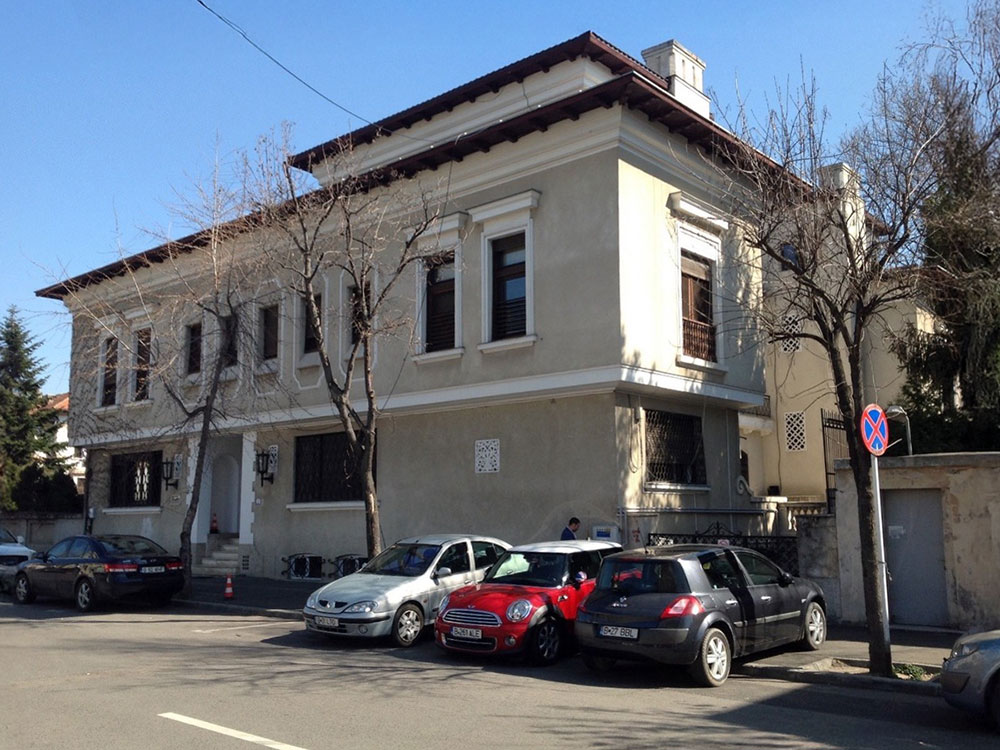
The former DCM residence in Bucharest as it looked following its sale by the previous owner, Lucien Horowitz. His former bedroom, the one occupied by the author’s son, Jonathan, in the early 1990s, is on the second floor and included the last two windows at the far right.
JONATHAN RICKERT
When we arrived in the summer of 1991, the facade of our residence was still pockmarked with scattered bullet holes, scars left over from the 1989 revolution. At least one bullet had penetrated the building’s living spaces, and we found that the mast for the rooftop TV antenna had been severed by an extraordinarily skillful (or lucky?) shot.
The home’s original owners, Mr. and Mrs. Armin Horowitz, had built the house, starting in 1944, in what turned out to be a supreme example of misplaced optimism and bad timing. Fine building materials were used and skilled, imported craftsmen reportedly participated in its construction.
In 1948, when the communists assumed full control of the government and King Mihai I (Michael) was forced to abdicate, the Horowitz family managed to leave the country, taking one suitcase each into exile.
Mr. Horowitz had been a prominent industrialist in pre-war Romania, and one can only speculate as to the deal he must have struck with the new authorities to gain his family’s freedom.
The senior Horowitzes ended up in Switzerland, while their teenaged son, Lucien, eventually settled in England, where he became a founder of the raw materials trading company Gover Horowitz & Blunt, Ltd.
Lucien had some business dealings with communist Romania before 1989, and I had met him at least a couple of times in the early 1970s, during my first tour there.
After the fall of Ceausescu, however, we saw each other more often when he came to Bucharest, both on business and in a prolonged and arduous effort to reclaim possession of his late parents’ home. He invited us out to dinner with his British-born wife, Rita, more than once.
I recall, in particular, a time when he showed up at our front door unannounced one weekend with a work-related question, commenting in passing at the entrance that he had never been inside the house in all the years since he had emigrated.
My wife, Gerd, and I hastened to invite him in and offered to show him around the whole house, from attic to basement, an invitation he accepted after politely demurring at first. We told him that morally, if not yet legally, the house was his, and that he should feel free to look wherever he wished.
After his initial hesitation, Lucien showed us around with enthusiasm, explaining many features and details that his parents had incorporated into the building to fit their interests and lifestyle and telling stories about its construction.
I recall his description of playing volleyball with friends in the high-ceilinged living room while the house was still under construction.
He also explained that the wide balcony that overlooked the spacious living room had contained a piano that his mother often played to entertain guests. (Lucien was to return at a later date with his wife and their son Stephen to show them where he and his parents had lived.)
When we came to the second-floor corner bedroom that our son, Jonathan, an eighth grader at the American School of Bucharest, occupied and where he was busily doing his homework, Lucien became visibly emotional for the first time, saying that the room had been his.
He politely lamented the presence of the wall-to-wall carpet, explaining that it obscured the beautiful parquet floor underneath. He added that he had been present when the workmen had fitted the final piece of wood into the elaborately patterned floor.
Then, turning to Jonathan, he reached into his pocket, removed his wallet, and took out an old Romanian 500 lei banknote that he said he had been carrying with him ever since the day he had fled from Romania.
In a show of the spontaneous generosity that is among Romanians’ most endearing qualities, he handed the banknote to Jonathan. Our son has treasured that gift ever since and always has displayed it prominently in a two-sided glass frame wherever he has lived.
Lucien did not get his house back from the Romanian government until a few years after we had completed our Bucharest tour. Once he did, he hoped to sell it to the U.S. embassy, which, for a number of financial and other understandable reasons, declined to purchase it. Another buyer quickly snapped the house up.
It saddens me that the lovely home where my family spent four happy years and where our distinguished U.S. Foreign Service predecessors, many of whom later became ambassadors, had lived no longer has any connection with the U.S. embassy or the Horowitz family.
But I will never forget Lucien’s kindness and generosity toward us.
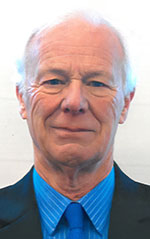
Retired Senior Foreign Service Officer Jonathan B. Rickert spent the majority of his 35-year career serving in or dealing with Central and Eastern Europe. His first assignment in the area was as Ambassador Llewellyn Thompson’s staff aide at Embassy Moscow (1967–1968). His final overseas posts were as deputy chief of mission in Sofia and then Bucharest.
When sharing or linking to FSJ articles online, which we welcome and encourage, please be sure to cite the magazine (The Foreign Service Journal) and the month and year of publication. Please check the permissions page for further details.