The Association for Diplomatic Studies and Training celebrates four decades of work to support diplomats and foster greater public appreciation for their work.
BY FRAN LESKOVAR
For 40 years, the Association for Diplomatic Studies and Training (ADST) has served the Foreign Service community by capturing, preserving, and sharing the experiences of U.S. diplomats, ensuring that their historical insights and lived experiences continue to inform and inspire practitioners, students, policymakers, and the broader public.
ADST was founded in 1986, when Foreign Service Institute (FSI) Director Stephen P. Low and Ambassador Richard B. Parker envisioned a nonpartisan, nongovernmental 501(c)(3) educational membership organization whose mission would be to support instruction at FSI and the future National Foreign Affairs Training Center (NFATC), then in the early stages of construction. ADST was conceived to not only support diplomatic tradecraft instruction at FSI/NFATC but also foster greater appreciation for U.S. diplomatic tradition and practice among Americans.
As Low reflected in the late 1980s: “The association can help a great deal to make the new campus not just another training center, but a center of focus for American diplomacy. It can help build that constituency that we always complain that we don’t have; a constituency of Americans who recognize that we’ve played a role in the world and that we can feel some pride in that.”
The Oral History Project Is Born
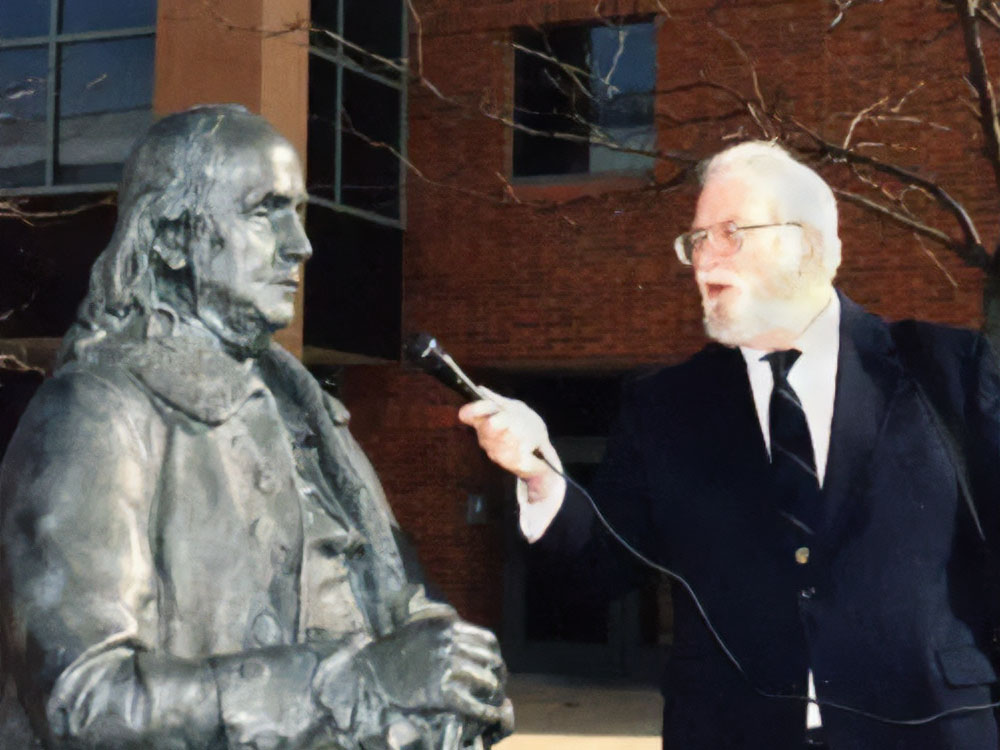
Charles “Stu” Kennedy, founder of ADST’s oral history program, interviewing the Ben Franklin statue at the NFATC campus in the early 2000s.
ADST
Around the same time that Low and Parker were laying the foundation for ADST, newly retired Foreign Service Officer Charles Stuart Kennedy was beginning an effort that would eventually become one of its signature programs. The inspiration came while attending the funeral of his former boss, Ambassador Burke Elbrick. As Kennedy later explained in his oral history: “I realized how many stories [Elbrick] had told us in Belgrade about things he did as a junior officer, and what he had done throughout his career, and I thought, ‘Gee, somebody really should have gotten those stories on the record.’ I thought maybe somebody better start doing something about it. I started to see the glimmers of an oral history program.”
Together with another retired consular officer, Vic Wolf, Kennedy quickly set about turning the idea into reality, identifying best practices in oral history, and exploring funding opportunities. What began largely as a volunteer effort aimed at preserving the experiences of U.S. diplomats found its first home at The George Washington University, later moving to Georgetown University.
The paths between Kennedy’s vision and Parker and Low’s organization first crossed in an unlikely place—an article introducing ADST in the pages of State Magazine. As Kennedy later recalled, with his unique sense of humor and candor: “An organization started over at the Foreign Service Institute, which we hadn’t heard about before. We read about it in State Magazine, and we thought, ‘We’re two retired consular officers of no great distinction, and here was an outfit with a bunch of ambassadors running it, and they were going to do oral histories [among other programs].’ We looked at each other, thinking ‘We’re dead.’”
As it turned out, Kennedy had little reason to worry. In 1988 Parker invited him to incorporate his oral history work into the association, and ADST’s Foreign Affairs Oral History Program as we know it today was born. Stu Kennedy received the 2014 Lifetime Contributions to American Diplomacy Award from the American Foreign Service Association. Read the interview with him in the September 2014 Foreign Service Journal.
The close relationship between ADST and FSI was embedded in the association’s identity from its earliest years. In 1987 the Department of State detailed its first Foreign Service officer to the organization to serve as executive director, establishing a practice that would continue uninterrupted for nearly four decades, until July 2025.
ADST was also closely involved in preparations for the 1993 inauguration of NFATC. Reflecting on his first year as ADST president following his retirement as director of FSI, Low recalled: “The first year was largely taken up with preparing for the inauguration of the National Foreign Affairs Training Center. ... We [ADST] wanted to make a big splash, and I think we succeeded.”
Becoming a National Treasure
ISTOCKPHOTO / RA3RN
ADST eventually found its home on the newly built campus, where it became a long-standing partner in supporting NFATC’s mission and initiatives. For Low, the association’s presence at NFATC offered an opportunity to “create an awareness of the history of American diplomacy” and foster “a climate of interest in [the] study of U.S. foreign policy” through the oral history collection.
As ADST entered its second decade, it expanded its activities by developing new programs that documented and narrated the experiences of U.S. diplomats. In 1995 ADST inaugurated its book program as “a service to the Foreign Service,” as Low told newly hired Publishing Director Margery Boichel Thompson. Conceived to not only preserve diplomatic experiences but also encourage FSOs to write about diplomacy and help them publish their works, the program flourished under Thompson’s leadership.
The ADST-DACOR Diplomats and Diplomacy Book Series, which celebrates its 30th anniversary this year, was the first to be launched. The Memoirs and Occasional Papers series soon followed, as did ADST’s own imprint, Arlington Hall Press. The ADST book program has grown into a respected source of books on diplomacy and the U.S. Foreign Service, with more than 120 titles to date, including many award-winning publications.
While the book program broadened public access to diplomatic experiences and insights, ADST continued to search for ways to reach new audiences beyond its traditional foreign affairs circles. As Low would often remark, “Diplomacy is well known for its lack of constituency.” To raise awareness of U.S. diplomatic history and illustrate how diplomacy has contributed to the nation’s development since 1776, ADST created an exhibit that narrated the story of diplomacy from its founding, highlighting the oft-overlooked role it has played in advancing U.S. interests and shaping the nation’s history.
Display panels were put up at both NFATC and the National Defense University. Eventually, with the help of the Una Chapman Cox Foundation—a longtime supporter of the association—ADST updated the exhibit and developed a traveling version, as part of its Century of Service initiative, bringing the story of American diplomacy to communities across the country.
Yet the program Charles Stuart Kennedy first envisioned in the mid-1980s as a retirement hobby project remains at the center of ADST’s mission. Over time, the Foreign Affairs Oral History Program has become the association’s flagship initiative. With more than 3,100 oral histories publicly available on the ADST website and, since 2004, at the Library of Congress, the collection, which gradually expanded from senior diplomats alone to capturing voices across foreign affairs, documents more than a century of U.S. diplomacy and engagement with the world.
The close relationship between ADST and FSI was embedded in the association’s identity from its earliest years.
Rich in historical insights, personal anecdotes, and lessons learned from those who lived it, the archive has become what former Senator Sam Nunn (D-Ga.) aptly described as a “national treasure” for practitioners, congressional offices, scholars, students, and the American public. Today it stands as one of the largest and most comprehensive diplomatic oral history collections in the world.
Sustaining and growing a small nonprofit organization has not been without challenges, however. Through it all, under a succession of senior FSOs serving as ADST president, countless staff, volunteers, and supporters, together with the hundreds of interns taken under their wings, have remained committed to carrying ADST’s mission forward. They dreamed, innovated, adapted, and persevered. They remained committed to public service and to ensuring that the experiences of U.S. diplomats would be preserved and passed on to future generations. While small in numbers, these men and women have left a big mark on the organization and even on the study, understanding, and appreciation of U.S. diplomatic history.
Going Strong at 40
Forty years later, ADST remains committed to its roots. While much has changed since the time of Low, Parker, and Kennedy, the association continues to thrive, building on their vision while embracing new opportunities, technologies, and audiences. Whether collecting oral histories, developing AI tools to support diplomatic tradecraft instruction, publishing books on diplomacy, providing diplomatic history resources to active-duty foreign affairs professionals, bringing the experiences of U.S. diplomacy to communities across the country through the Portraits in Diplomacy initiative, or honoring American diplomats and U.S. Marine Security Guards through the U.S. Foreign Service Commemorative Coin Act, ADST remains guided by the conviction that our history is enriched by the experiences and voices of those who lived it.
As Senate Historian Emeritus Don Ritchie—whom Kennedy consulted while establishing ADST’s oral history program—noted during the opening reception for ADST’s exhibit, “U.S. Diplomacy: From Its Beginnings to Today,” in the Senate’s iconic Kennedy Caucus Room in early 2026, it was remarkable to witness an organization that began as a hobby grow into the professional institution it is today.
For me personally, as a young foreign affairs professional, it has been an honor and a true privilege over the past two years to contribute to ADST’s mission and learn valuable lessons from generations of our nation’s diplomats. As ADST enters its fifth decade, its story—like the history of U.S. diplomacy itself—belongs as much to the future as to the past. So, let’s keep writing it!
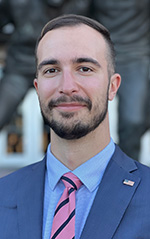
Fran Leskovar is ADST’s special projects coordinator, focused on integrating emerging technologies into diplomatic tradecraft training and instruction. His work includes developing AI-based training tools and initiatives for diplomatic practitioners, as well as digital storytelling projects designed to educate the broader American public about our nation’s diplomatic history. A passionate oral historian, Leskovar is committed to making the experiences of past generations accessible.
“A Passport to Diplomacy”—The ADST Internship Program
ADST’s internship program has become an important component of its mission, introducing hundreds of American students to the practice of diplomacy, the experiences of America’s diplomats, and careers in the U.S. Foreign Service.
Although its structure and size have evolved considerably since the program was established more than 30 years ago, its central objective has remained the same: bridging generations of foreign affairs professionals and inspiring the next generations of Americans to answer the noble call of public service.
Recently the program has undergone a comprehensive revitalization, blending a traditional internship with a structured educational component. Informally called the Diplomatic Leadership Academy, it provides interns with opportunities to engage directly with diplomatic practitioners through sessions exploring various dimensions of diplomatic work.
For many interns, the experience becomes a first “passport to diplomacy,” bringing a profession observed from afar and often misunderstood into sharper focus. Interns are encouraged to see themselves not only as learners but also as contributors, pursuing new ideas, taking ownership of projects, and leaving behind initiatives that continue to shape the association’s work.
For more information or to apply, go to https://adst.org/about-adst/interns.
When sharing or linking to FSJ articles online, which we welcome and encourage, please be sure to cite the magazine (The Foreign Service Journal) and the month and year of publication. Please check the permissions page for further details.
Read More...
- “Telling Our Stories: The Foreign Affairs Oral History Collection” by Susan B. Maitra, The Foreign Service Journal, March 2014
- “Turning the Tables: An Interview with Stu Kennedy” by Shawn Dorman, The Foreign Service Journal, September 2014
- “The Dayton Peace Accords at 30: Firsthand Accounts from U.S. Diplomats Who Were There,” compiled by Fran Leskovar, The Foreign Service Journal, November-December 2025