Over the past year, the NSC has undergone a significant reduction in expertise, staff, and responsibility. Here’s why that matters.
BY KELLY ADAMS-SMITH
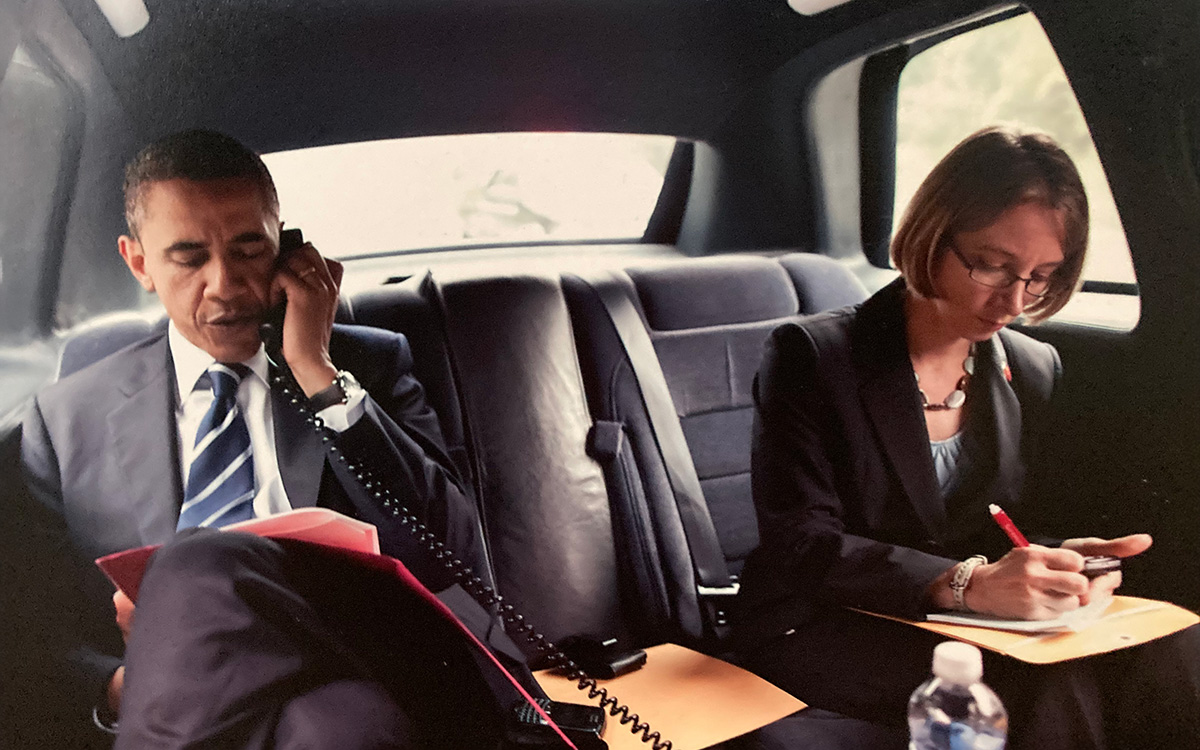
Kelly Adams-Smith with President Barack Obama in his motorcade, 2011.
COURTESY OF THE BARACK OBAMA PRESIDENTIAL LIBRARY
The Pentagon announces the review of a strategic military partnership with Australia and the United Kingdom, surprising the State Department, Congress, and foreign partners. The Federal Aviation Agency (FAA) shuts down airspace over El Paso in response to uncoordinated deployment of new anti-drone technology by the Department of Homeland Security and the Pentagon. Thousands of frustrated Americans scramble to leave the Middle East after the United States and Israel launch Operation Epic Fury in Iran. U.S. officials offer multiple conflicting responses when asked about the strategy and ultimate aims of this war.
These missteps in early 2026 could all have been avoided with a rigorous interagency policy process coordinated by the National Security Council (NSC). Yet over the past year, the NSC has undergone a significant reduction in expertise, staff, and responsibility. The regular battle rhythm of interagency meetings has decelerated. And the national security adviser, Marco Rubio, serves double duty as Secretary of State, a dual-role structure not seen since the 1970s. Senior administration officials have brushed aside concerns about the current state of the NSC by suggesting there is little need for interagency coordination when the Cabinet members responsible for national security “get along” and are all singularly focused on implementing the president’s vision.
To Foreign Service veterans of demanding, last-minute NSC taskers and unrelenting meeting schedules, the current situation—a skeletal NSC headed by a dual-hatted Secretary of State—may seem ideal. It isn’t. And here’s why.
The Problem in Context
To appreciate the risks of the current situation, some history is useful. Congress created the NSC in 1947 to address deficiencies in U.S. national security policymaking that became evident during World War II. First, believing that a tragedy like the bombing of Pearl Harbor could have been prevented with better information sharing among various branches of government, Congress sought a mechanism that would break down informational stovepipes.
Further, Congress aimed to reduce insularity in presidential national security decision-making, which had characterized President Franklin Roosevelt’s tenure and left Vice President Harry Truman uninformed on critical matters, including the development of the Manhattan Project. Finally, in recognition of the United States’ leading post-WWII role in the world, Congress created numerous new national security entities, including the Department of Defense and Central Intelligence Agency. In the NSC, Congress established a mechanism that would allow the president to get the best advice and coordinated recommendations possible from this new and expanding national security enterprise.
The national security adviser, Marco Rubio, serves double duty as Secretary of State, a dual-role structure not seen since the 1970s.
The legislation establishing the NSC is barebones, allowing each president to tailor its structure to their specific foreign policy decision-making style, typically outlined in an administration’s first national security–related policy directive. While the NSC structure adapts to the needs of each administration, over time the system we call the NSC has evolved into four distinct components: (1) the senior-level meeting of national security Cabinet officials when chaired by the president; (2) the formal interagency policy process from Sub-Policy Coordinating Committees (Sub-PCCs) to Deputies Committee (DC) and Principals Committee (PC) meetings; (3) the professional and expert NSC staff, mostly detailed from other executive branch agencies, including State, who manage the interagency process and staff the national security adviser and president; and (4) the intimate, informal circle of advisers, whether inside or outside government, who have the president’s ear on national security.
Effective policymaking requires a balance among these four pillars: If any becomes too dominant or too weak, the system can break down, resulting in suboptimal policy outcomes, or worse.
The NSC in Action
In most administrations, National Security Council meetings chaired by the president are relatively infrequent and are usually the result of a long deliberative process about only the most consequential national security issues. Such meetings are serious business—for example, President Barack Obama held a series of NSC meetings in 2011 to discuss and ultimately approve the special operation that resulted in the capture and killing of Osama bin Laden. These meetings allow principals face time with the president and the chance to offer assessments, advice, and recommendations that reflect the expertise of their agencies. Principals raise objections, deliberate courses of action, and discuss risk.
When such meetings don’t happen, are performative, or are dominated by one agency or official, decision-making procedures and policy outcomes suffer. Expertise isn’t shared. Frustrated Cabinet officials may resort to getting their message to the president and to the public in other ways, including via leaks and social media. A serious NSC meeting (and the process leading up to it) could, for example, have focused our leadership on the need to develop clear political aims for the recent attack on Iran; matched ways with means; established expectations with allies; evaluated costs and risks, including to U.S. citizens in the region; and resulted in clear, coordinated messaging about our actions and goals.
The multilevel interagency process leading up to a National Security Council meeting is just as important as the NSC meeting itself. From Sub-PCCs at the deputy assistant secretary level to PC meetings at the Cabinet level, this is where the rigorous analysis and debate of U.S. foreign policy options take place. Traditionally, decision-making is urged at the lowest level possible, and only intractable issues are elevated to the next higher level. It is this kind of informed decision-making that could have allowed the Pentagon and Department of Homeland Security to deconflict use of new anti-drone technology while balancing the FAA’s safety concerns. Of course, there is such a thing as too much process. If the cadence of meetings does not allow for adequate preparation or if meetings become a substitute for decision-making and action, the process overwhelms policy. Good policy demands a rational process.
The NSC staff size fluctuates from administration to administration, based not only on the president’s needs but also on how staff are counted. President Obama’s NSC staff was relatively large at about 300 staffers, but this reflected the integration of the Homeland Security Council into the Obama NSC. Some administrations include Situation Room, records management, and administrative staff in their headcount. Others do not.
This shift toward informal advising at the expense of formal NSC meetings, expertise, and the interagency process has stifled coordination.
When the NSC staff becomes too small, too large, or is left without proper oversight, the policy system can break down. An NSC staff that is too small cannot develop the expertise or breadth needed to adequately coordinate among large specialized departments and agencies while also staffing the president and national security adviser. An NSC staff that is too large may tend to “overcoordinate,” usurping responsibilities that might normally reside in the rest of the executive branch. An NSC that is left without proper oversight can “go operational,” with dire consequences like the Iran-Contra affair during the Reagan administration.
Finally, while every president has a “kitchen cabinet” of trusted, informal advisers—some expert, some not—their impact on national security depends on the effectiveness and strength of the formal National Security Council process. If the other three pillars of the NSC are strong, the kitchen cabinet can serve as a helpful, additional sounding board for the president. But when informal “national security counselors” replace the formal NSC almost entirely, it undermines interagency coordination and results in uninformed, uncoordinated national security policy.
The gold standard of National Security Council structure and operation is widely considered to be the “Scowcroft model” created by President George H.W. Bush’s national security adviser, Brent Scowcroft. The model consists of a “fair” national security adviser (NSA) who has the trust of the president and the respect of the other NSC members. The NSA serves as an honest broker, avoids the limelight, and is an unbiased coordinator of the various policy recommendations of agency representatives.
The NSA chairs a regular schedule of PC meetings, and the deputy NSA chairs a similar set of DC meetings. This process develops multiple options for the president, rather than presenting a single NSC or executive branch view on a course of action. Having heard the best recommendations of his experts, the president is then free to decide on a course of action. Such a balanced, well-oiled system produced the broad international coalition that reversed Iraq’s 1991 invasion of Kuwait under a United Nations mandate. It also managed the U.S. response to the collapse of the Soviet Union and the end of the Cold War.
What Went Wrong with the NSC?
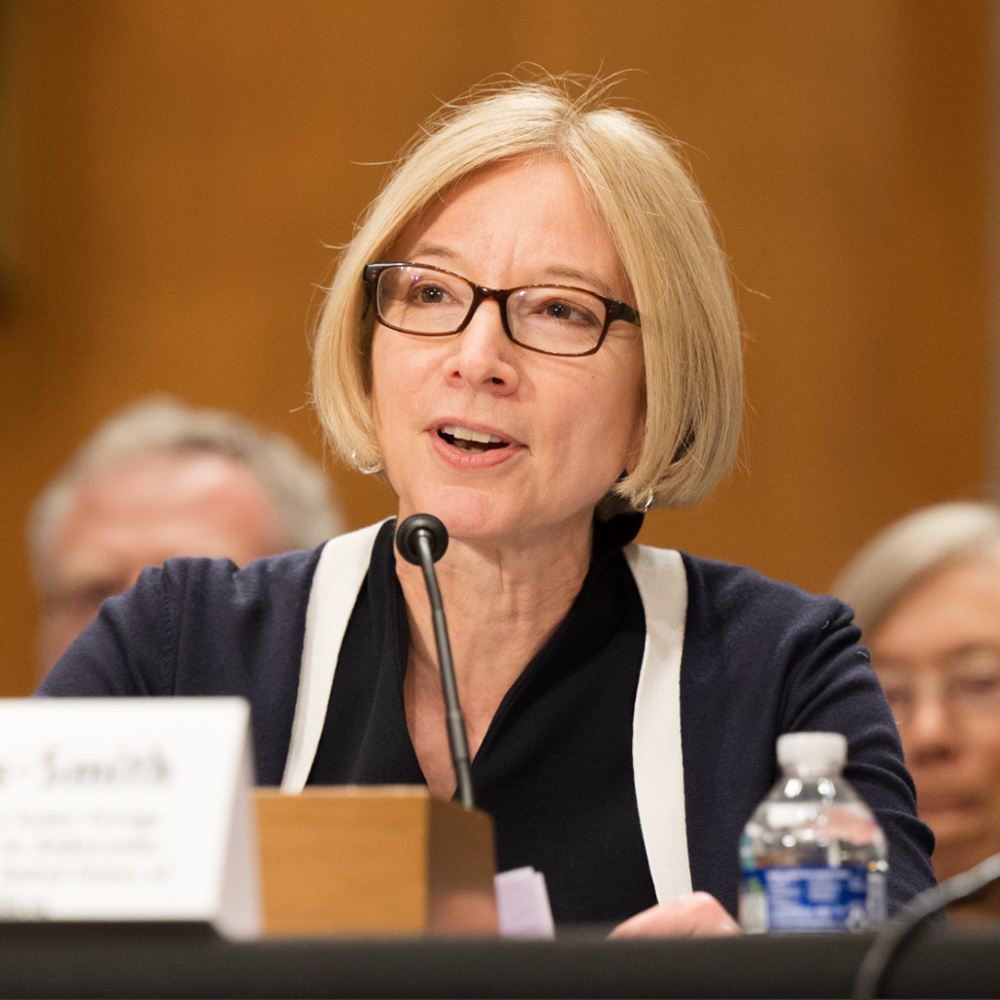
Kelly Adams-Smith testifies before the Senate Foreign Relations Committee during her confirmation hearing to become U.S. ambassador to the Republic of Moldova, May 9, 2024.
COURTESY OF KELLY ADAMS-SMITH
When Congress created the NSC, it assumed that the president would value a deliberative process and would welcome the best advice of his experts, even when that advice conflicted with his assumptions or desired courses of action. Each NSC member institution, including the State Department, has an important role in this process. They provide input on agendas and readahead materials, participate in meetings, negotiate recommendations, deconflict actions, and implement decided policy. Cabinet members who trust the national security adviser and the system, and know that their views are reaching the president, will not feel the need to subvert the system. Even in the most coordinated system, process fouls can and do happen, but outcomes on the whole are better coordinated. Such a system, when functioning well, is the envy of democracies around the world, and many of our allies have tried to emulate it.
Currently, there is an imbalance among the NSC’s four pillars. National Security Council meetings rarely take place. If televised Cabinet meetings are any indication, if and when NSC meetings do happen, they are likely less a forum for debate than an exercise in groupthink, denying the president the expert advice that Congress established the NSC to give.
The interagency process itself is also broken. One outward expression of its dysfunction is the gutting of NSC staff. Another is the dual-hatting of the national security adviser and Secretary of State. Each role is more than a full-time job. Among other responsibilities, a Secretary of State must conduct our foreign policy with world leaders, requiring extensive time away from Washington; lead the workforce in Foggy Bottom and abroad; and represent State views and recommendations within the NSC.
The national security adviser must lead NSC staff, coordinate the policy process, advise and staff the president, and interact with other countries’ national security advisers. No one person can do all this successfully. In addition, having the Secretary of State serve as NSA subverts the idea of the NSA being an honest broker among agencies, denies both State and the NSC the attention and leadership those institutions require, denies the president an additional strong, expert voice on foreign policy, and leaves foreign partners without a more readily available interlocutor.
The demands of this dual role make it unsurprising that Secretary Rubio has not (as of this writing) managed to address the department since his first day in office. He has stood by as those reporting to him carried out unprecedented reductions in force (RIFs) and the near elimination of foreign assistance as an instrument of U.S. power, a tool that he supported while in the Senate. Instead of elevating State’s role, his dual appointment has diminished the role of both the department and the NSC.
As the primary three pillars of the NSC have been sidelined, the small and informal group of “national security counselors” has come to dominate policymaking. Alongside a tight circle of relatives, special envoys, and business advisers, Secretary Rubio plays a leading role in the president’s kitchen cabinet. In this capacity, he seems to operate more as a personal adviser than as a representative of State Department or NSC institutional expertise. This shift toward informal advising at the expense of formal NSC meetings, expertise, and the interagency process has stifled coordination, leaving policy outcomes less predictable, less efficient, and less strategically sound.
America’s 250th anniversary is an opportunity to reflect on the past and to define both our future role in the world and the policy framework required to sustain it. To lead responsibly, the United States needs an interagency system that leverages the unmatched expertise and institutional knowledge of the U.S. national security enterprise. While a sound interagency process does not guarantee successful policy, a flawed or nonexistent one courts failure.

Kelly Adams-Smith retired from the Senior Foreign Service in 2026 after a 28-year State Department career. From 2011 to 2013, she served as deputy executive secretary of the National Security Council, where she managed the interagency policy process. She is currently an adjunct professorial lecturer at American University and serves on the FSJ Editorial Board.
When sharing or linking to FSJ articles online, which we welcome and encourage, please be sure to cite the magazine (The Foreign Service Journal) and the month and year of publication. Please check the permissions page for further details.
NSC from the Inside
There is no better way for a Foreign Service officer to get an insider’s view of the interagency policy process than through a detail to the National Security Council.
Over the last several decades, hundreds of Foreign Service professionals on loan from State and other foreign affairs agencies have spent a year or two a stone’s throw from the West Wing in the wood-paneled offices of the Eisenhower Executive Office Building. They have served as policy directors and senior directors, as watch officers in the White House Situation Room, and as NSC spokespeople, among other positions.
From 2011 to 2013, I had the privilege of serving in the NSC Executive Secretariat as a deputy executive secretary. It was both the most difficult and most rewarding tour of my 28 years in the Foreign Service. In addition to ensuring President Obama had the information he needed to make foreign policy decisions by managing the interagency paper flow and the regular PPC-DC-PC meeting schedule, I had the chance to staff presidential calls from the Oval Office and serve as the NSC representative on Air Force One during domestic and foreign travel. The hours were grueling, the pace unrelenting. But the caliber of people the NSC traditionally attracts and the chance to see decision-making at the highest level made the long hours worthwhile.
The reduced size of the NSC in the second Trump administration means opportunities for State details are now extremely limited. This is a loss both for the NSC and State, which benefited immensely from the experience and knowledge its detailees brought back to Foggy Bottom. When NSC detail opportunities return in the future, State should be first in line to fill them.
—Kelly Adams-Smith
Read More...
- 2020 Awards for Constructive Dissent, The Foreign Service Journal, December 2020
- Explainer: The U.S. National Security Council (NSC) by Harvard Kennedy School’s Belfer Center, April 2025
- “Diplomacy in Decline” by Abigal Williams, NBC News, May 2026