Speaking Out
BY KATHERINE NTIAMOAH
Speaking Out is the Journal’s opinion forum, a place for lively discussion of issues affecting the U.S. Foreign Service and American diplomacy. The views expressed are those of the author; their publication here does not imply endorsement by the American Foreign Service Association. Responses are welcome; send them to journal@afsa.org.
American diplomacy is at a pivotal moment. Rapid shifts in technology, global power dynamics, and societal expectations demand a Foreign Service that is agile and prepared for complex challenges.
As a member of the Foreign Service Journal Editorial Board, I am writing to share a vision for the future of U.S. diplomacy, one that requires ambition rooted in humility, creativity anchored in accountability, and innovation married to experience.
I have spent nearly all my professional career advancing U.S. foreign policy across Africa, Asia, Europe, and Latin America. Along the way, I have advised ambassadors, briefed Cabinet-level officials, and represented U.S. policy to global audiences.
Now at the Hamilton Lugar School, I combine diplomacy and academia to shape the next generation of foreign affairs professionals.
I offer this context to frame my deeply held beliefs about who we are as a nation supported by one of the most capable and skilled diplomatic corps in the world.
Beyond the Resource Trap
The next 250 years of American diplomacy need more than a wish list; they demand a blueprint for a professional class that can adapt, experiment, and ensure that U.S. engagement continues to protect, stabilize, and elevate the nation long after headlines fade.
It is a common refrain that U.S. diplomacy is chronically understaffed and underfunded. While true, resources alone are not the most salient variables of success. In the past, influxes of funding and staff have been diluted across competing mandates in the absence of a serious internal strategy—namely, the institutional discipline to prioritize core national interests and make the difficult trade-offs required to stop pursuing secondary objectives. Without such strategic discipline, new resources are simply absorbed by mission creep, leading to the same chronic shortfalls.
We must move beyond pointing to external constraints. The real investment must be in the quality of our input: defining a rigorous standard of practice and fostering the moral courage to challenge failing status quos.
The dismantling of critical U.S. humanitarian assistance and peacebuilding bodies has indeed constrained our capacity, but without a fundamental reimagining of our professional culture—including the institutional discipline to prioritize mission-critical objectives over a “Christmas tree” of peripheral mandates and a shift from bureaucratic risk-aversion to practitioner-led tradecraft—even the most innovative funding models will fail to produce sustainable impact.
We cannot simply fund our way out of an institutional deficit; we must intentionally restructure how we deploy our intellectual capital.
Strengthening the Professional Corps
The abrupt end of the Diplomat in Residence program last year highlighted the structural fragility of our outreach to future generations of professional diplomats. Relying on a minimal rotation of officers to serve as the primary engine for engaging a nation of nearly 350 million was always a vulnerability. As someone who began her career as a Charles Rangel Graduate Fellow, I know firsthand the power of early mentorship.
We must reimagine pathways into the Foreign Service that go beyond traditional pipelines, strengthening fellowships and regional hubs that connect aspiring leaders with the realities of diplomatic tradecraft.
The real investment must be in the quality of our input: defining a rigorous standard of practice and fostering the moral courage to challenge failing status quos.
We must scale proven models like the Diplomat in Residence program in the Midwest, which successfully bridged the gap between nontraditional candidates and elite fellowships like the Rangel and Pickering. By institutionalizing these pathways, we ensure that new entrants are equipped with the practitioner-led tradecraft required to navigate a fragmented global landscape.
Recruitment, however, is only the first step toward a more effective Service. The future of U.S. influence depends on our ability to retain expertise and build a corps that views complex problem-solving as its primary mandate. This requires a culture that moves past the “generalist” ideal toward a more specialized, high-performance model in which merit and strategic insight are the sole arbiters of advancement.
Our strategic reach is capped when our internal culture prioritizes traditional consistency over the innovative friction required to solve modern, nonlinear challenges.
Defining the Tradecraft
The practice of diplomacy requires more than individual policy expertise; it demands a standardized, rigorous tradecraft that can be consistently applied across diverse contexts. To support this, we must establish a common curriculum of diplomacy that ensures a baseline of professional competence bridging the gap between traditional reporting and modern analytical tools.
This begins with data-informed pattern recognition, a method that integrates qualitative, on-the-ground observations with structured data, such as economic indicators or mobility trends.
By synthesizing these diverse information streams, we can move beyond the limits of isolated reporting and develop the strategic foresight necessary to anticipate global shifts before they become crises.
It requires agile advocacy, equipping officers with the ability to translate national priorities into actionable, highly contextualized local strategies with speed and judgment. Crucially, this innovation must be coupled with institutional memory, a deep, humble awareness of our historical iterations that allows us to learn from past challenges and integrate lessons across regions.
Yet, mastering these skills requires time, a commodity the State Department rarely affords its people. Unlike the military, which utilizes a personnel “training float” to pull service members off the line for dedicated professional development, the Foreign Service has historically lacked the personnel buffer to allow for serious, midcareer upskilling.
We must be clear: For a modernized tradecraft to take root, the State Department must be fully staffed to accommodate this professional development as a core requirement, rather than a secondary convenience that is sacrificed to immediate operational demands as at present. This “stay-and-play” culture prevents us from building the deep expertise required for 21st-century threats.
At the Hamilton Lugar School, I have witnessed how academic spaces can cultivate these competencies, but State itself must build the capacity to continuously train its diplomats. Public service extends beyond embassies and capitals; it includes a commitment to creating pathways where emerging talent can navigate complexity with strategic insight and ethical clarity.
A Commitment to Credibility
U.S. diplomacy has weathered profound changes over the past two centuries. From industrial expansion to the Cold War and into the age of artificial intelligence, diplomats have adapted to shifting threats. This work must continue to evolve, guided by accountability and strategic vision.
The next 250 years of diplomacy will be defined not just by U.S. influence but by the credibility, trust, and competence of the Americans we serve. We must sustain global leadership by embedding humility, curiosity, and rigor into every decision. Our ability to stabilize crises, prevent conflict, and advance shared prosperity hinges on our willingness to prioritize both ethical and practical outcomes.
This is my vision for American engagement, offered in optimism and with recognition of the extraordinary people who carry this work forward.
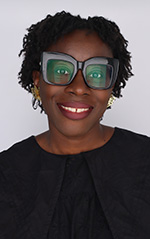
Katherine Ntiamoah is the director of policy engagement and strategic partnerships at Indiana University’s Hamilton Lugar School of Global and International Studies. As a Foreign Service officer from 2011 to 2025, she served in Washington, D.C., Latin America, Asia, Europe, and Africa. A 2026 Aspen Strategy Group Rising Leader and Aspen Ideas Fellow, she also directs the allocation of municipal social service funding for the City of Bloomington, Indiana. An alumna of the University of Denver and Indiana University, she interrogates the intersections of power, language, and culture on her Substack, Still, I Notice Everything.
When sharing or linking to FSJ articles online, which we welcome and encourage, please be sure to cite the magazine (The Foreign Service Journal) and the month and year of publication. Please check the permissions page for further details.
Read More...
- The Future of the Foreign Service—As Seen Through the Years, The Foreign Service Journal, September 2018
- The Diplomacy Imperative: A Q&A with William J. Burns, The Foreign Service Journal, May 2019
- SoftPower/FulStories #34: Katherine Ntiamoah (Podcast) with Christopher Wurst, October 2025
- Still, I Notice Everything (Substack) by Katherine Ntiamoah