Responding to the Fukushima Nuclear Accident: U.S. Assistance to Japan
There are lessons to be learned from the U.S. government’s response to this megadisaster on the territory of a major ally.
BY STEVEN AOKI
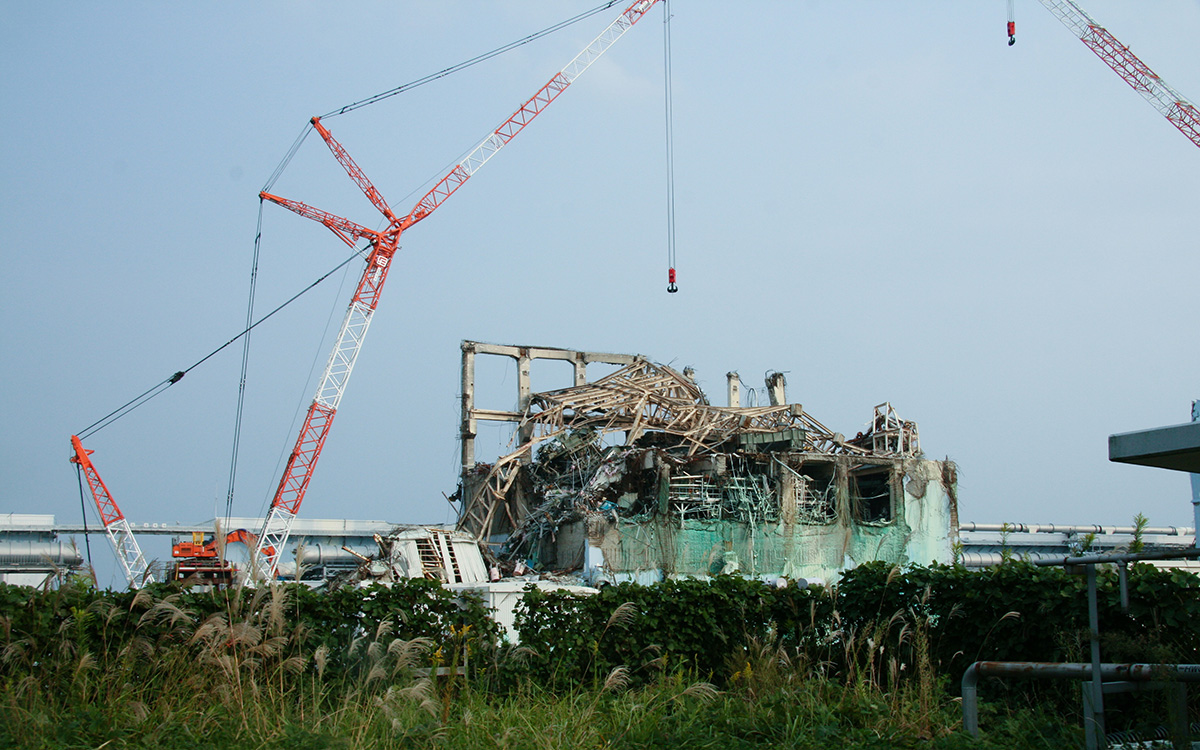
Cranes near Reactor Unit 3 at the Fukushima Daiichi Nuclear Power Plant on October 11, 2011, months after the megadisaster.
Giovanni Verlini / IAEA
March 11 of this year marks the 15th anniversary of the 2011 Great East Japan Earthquake. This magnitude 9.0 earthquake—the strongest in Japan’s history—created a tsunami that inundated 650 kilometers of Japanese coastline, causing more than 20,000 deaths and initiating a catastrophic accident at the Fukushima Daiichi nuclear power plant. The meltdown of three of the plant’s reactors released high levels of radioactive material into the air and groundwater, initiating a crisis that lasted for weeks, required the evacuation of thousands of nearby residents, created billions of dollars in economic damage, and caused a loss of confidence in nuclear power generation.
The accident has since been the subject of multiple reviews by official Japanese government agencies, independent commissions, and international organizations. There are also lessons to be learned from recalling the U.S. government’s response to this megadisaster on the territory of a major ally. Political will to help mattered, but success was possible because the U.S. had on hand both extensive, well-trained technical teams and a flexible interagency management system that was able to mobilize and deploy assistance on an unprecedented scale. Because it could quickly mobilize and manage these assets, the United States was able within days to launch a massive, integrated aid effort that saved lives, hastened recovery, and built lasting goodwill.
Key roles were played by the Embassy Tokyo country team, which coordinated across a sometimes disjointed Japanese government; the U.S. Department of Defense, which committed U.S. ships, aircraft, and service personnel to a massive assistance effort; the professional emergency responders in the U.S. Agency for International Development (USAID); and nuclear experts from the Department of Energy (DOE) and Nuclear Regulatory Commission (NRC).
I was in Washington at the time of the accident, managing the flow of data from the DOE team deployed to Japan and reporting to the Secretary of Energy and the White House. I was also responsible for tasking our national laboratories with technical analyses to support high-level decisions, including on the level of risk faced by population centers in Japan and the U.S. itself.
A Catastrophic Nuclear Accident
When the tsunami struck the Fukushima Daiichi nuclear power plant at around 3:30 p.m. on March 11, 2011, waves surged high over the seawall intended to protect the reactors. They flooded areas of the plant housing vital equipment, most notably backup diesel generators. The earthquake 40 minutes earlier had already disabled the facility’s connections to the outside power grid, so the plant was now almost entirely without electrical power. Although automatic controls had safely shut down the three operating nuclear reactors, they still needed to run electric pumps to circulate cooling water to keep their nuclear cores at a safe and stable temperature. A prolonged electrical blackout would stop this active cooling, putting each of the reactors on a path to overheating and, eventually, to irreversible core meltdown.
Responsibility for containing this spiraling nuclear disaster largely fell to the operating staff of the reactor. With only limited communications with the outside, and confronting technical challenges far beyond those anticipated in their emergency operations manuals, operators improvised imaginative approaches to combat the accident. To relieve internal pressure, they allowed some radioactive steam to escape while using fire trucks to inject cooling water into the damaged reactor cores. As supplies of fresh water ran out, they shifted to injecting sea water.
Despite these heroic efforts, plant operators were unable to prevent core meltdowns at the three reactors, resulting in substantial releases of radioactive materials and hydrogen gas explosions that partially destroyed the reactor buildings. External power and reliable cooling were not restored to the damaged reactor cores until some two weeks after the quake, leaving 9,000 square kilometers of contaminated land, 160,000 people evacuated from their homes, and a decades-long problem of cleanup and recovery.
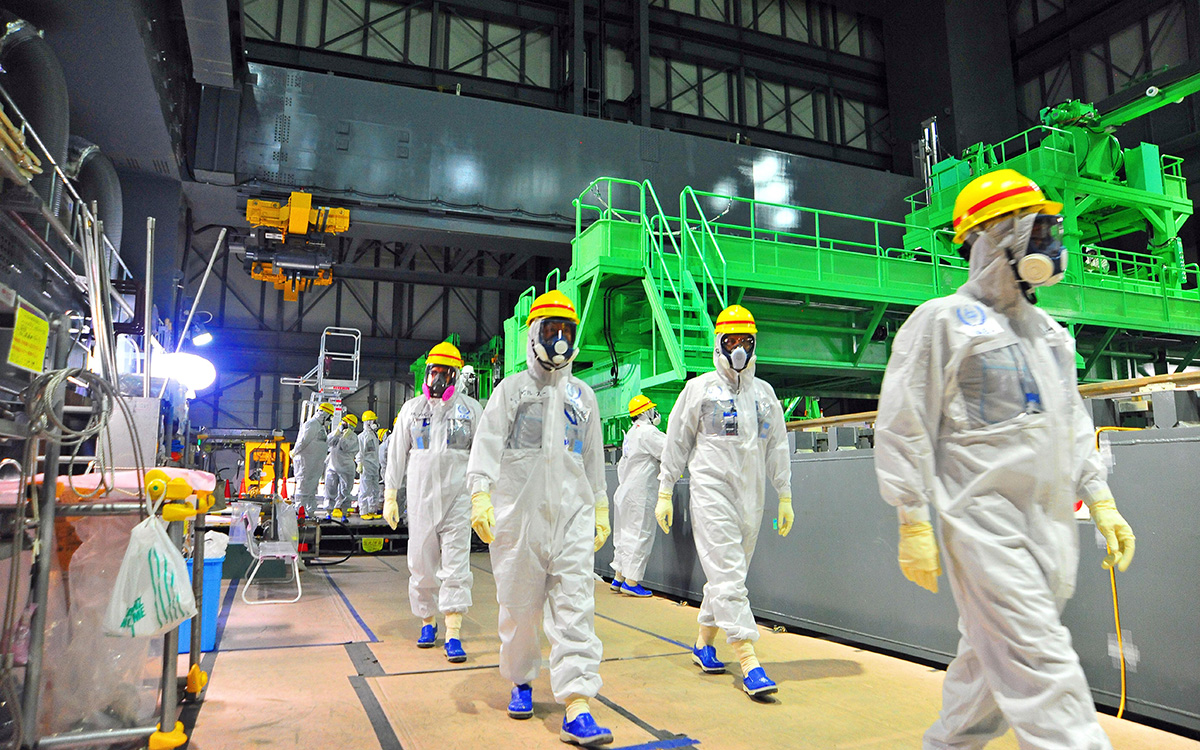
On November 27, 2013, IAEA experts visit the Fukushima Daiichi Nuclear Power Station in Okuma to view the fuel assembly removal process in Reactor Unit 4. The plant suffered a catastrophic meltdown in March 2011.
IAEA
U.S. Assistance
The United States offered assistance to Japan almost immediately after initial reports of a major earthquake and tsunami. President Barack Obama called Prime Minister Naoto Kan on March 12 to offer all possible help, an offer that was quickly reinforced by Ambassador John Roos and Embassy Tokyo in their outreach to Japanese counterparts. Following well-established protocols for U.S. response to overseas natural disasters, the Office of Foreign Disaster Assistance within USAID dispatched a Disaster Assistance Response Team (DART) to Japan to coordinate response activities by U.S. government civilian agencies. USAID’s ability to offer an integrated and rapidly deployable package of assistance that was already certified to meet relevant international standards facilitated quick acceptance by a Japanese government that had few preparations in place to receive aid from other countries.
Because of the developing nuclear component to the disaster, the DART included technical experts from the NRC and DOE. As in previous earthquake-related deployments, it incorporated urban search and rescue teams from county fire departments. DART personnel arrived in Japan on March 13 and immediately joined Japanese counterparts in surveying damage, searching for survivors, and identifying structurally sound buildings that could be used as temporary shelters.
DART leadership joined Ambassador Roos in Tokyo to form a team of U.S. agency representatives; this team would go on to meet regularly with Japanese counterparts led by Goshi Hoshono, a senior adviser to Prime Minister Kan. They jointly reviewed the torrent of requests for information and assistance flowing between the two governments. High-level engagement drove greater interagency coordination and information sharing, particularly on the Japanese side, where important information about the nuclear accident sometimes failed to flow upward.
The Department of Defense (DOD) provided the largest and most visible piece of U.S. assistance to Japan. At the time, nearly 40,000 U.S. military personnel were stationed in Japan, and major naval, air, and ground assets were available to participate in recovery operations. Before the earthquake, U.S. military forces already worked closely with Japanese counterparts, sharing procedures and equipment. The United States was therefore well prepared to stand up a cooperative military response, “Operation Tomodachi,” to support relief activities led by the Japanese Self-Defense Forces.
U.S. ships and helicopters brought tons of food, drinking water, and other emergency supplies to isolated survivors, while Japanese helicopters refueled onboard U.S. aircraft carriers. A specialized Marine Corps unit led efforts to clear debris and reopen Sendai Airport, and salvage experts helped open debris-clogged seaports. U.S. Air Force and Navy aircraft surveyed tsunami-damaged terrain, while a Global Hawk drone and a U-2 spy plane safely overflew the damaged Fukushima reactors. At its peak, the United States committed 24,000 service members, 189 aircraft, and 24 Navy vessels to relief efforts under Operation Tomodachi. DOD estimated the cost of the operation, for which it drew on its global humanitarian assistance authorities, totaled $88.5 million.
Success was possible because the U.S. had on hand both extensive, well-trained technical teams and a flexible interagency management system that was able to mobilize and deploy assistance on an unprecedented scale.
The U.S. also sent a team from the Department of Energy’s Aerial Measuring System (AMS). The AMS team contributed equipment that was mounted on an Air Force helicopter and a fixed-wing airplane to measure the amount of radioactivity on the ground. Flying more than 100 survey flights between March 16 and May 28, the DOE/AMS team mapped the primary deposition zone stretching northwest some 80 kilometers from Fukushima. They also established that more densely populated regions along the coast had received significantly lower doses.
Americans on the ground received extensive support, much of it highly technical, from experts back home. NRC and DOE tasked scientists and engineers at U.S. national laboratories to run computer simulations of likely reactor accident developments and to estimate public radiation exposure under hypothetical worst-case scenarios. These “what if” analyses provided valuable context as political leaders discussed whether it would be necessary to evacuate as many as 80,000 U.S. citizens from around Tokyo and Yokohama.
Looking Back
In 2011 the United States was able to provide substantial assistance to a close ally in a disaster of extraordinary size and complexity. Successful execution of this humanitarian assistance mission directly helped the victims of the disaster; beyond that, the scale, effectiveness, and generosity of U.S. aid paid broad political dividends for the overall bilateral relationship.
Our success depended on training, planning, and specialized resources carefully maintained within the U.S. government. Military readiness, ranging from the individual unit level up to the global reach of our strategic airlift, was a visible example, but civilian agencies were similarly prepared. USAID’s Office of Foreign Disaster Assistance was ready to launch a DART when and wherever needed, including by maintaining contracts with local public safety agencies to deploy their urban search and rescue teams. The DART, in turn, drew from conceptual approaches built into Department of Homeland Security planning for responses to major domestic emergencies.
The AMS team that the Department of Energy sent to Japan was one component of the emergency response system that would be called on in the event of a nuclear accident or radiological attack at home. (The team is also used routinely to survey high-profile events like the Superbowl to ensure there are no hidden radiation threats.) Embassy Tokyo and U.S. policymakers also tapped into the broad expertise of the U.S. scientific community. Across all agencies, the assistance provided drew on programs, plans, legal authorities, and contingency appropriations approved by Congress.
That said, there were certainly areas for improvement. Initial handling of assistance requests was often chaotic, and it took time to establish an orderly process. It was difficult to get Japanese agreement to the public release of radiation measurements, and the United States ended up acting unilaterally, with tacit Japanese concurrence. Federal agencies did not provide data on radiation transport to U.S. territory to their state and local government partners in a timely way.
Unfortunately, the natural and man-made dangers that arose following the March 2011 earthquake have not vanished, and we will no doubt face other equally complex situations around the world in the future. If there is a lesson to be drawn from our experience 15 years ago, it is that planning, readiness, and the practiced ability to manage cooperation across normal organizational boundaries will pay substantial dividends in any future crisis.
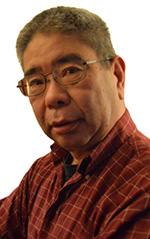
Steven Aoki retired from the U.S. Department of Energy in 2015 as deputy under secretary for counterterrorism and counterproliferation, a position he held at the time of the Fukushima nuclear accident. He previously was a Civil Service officer at the State Department in the Bureaus of Politico-Military Affairs and Near Eastern Affairs, and served on the National Security Council staff.
When sharing or linking to FSJ articles online, which we welcome and encourage, please be sure to cite the magazine (The Foreign Service Journal) and the month and year of publication. Please check the permissions page for further details.
Read More...
- “A Partnership-Centered Approach to the Indo-Pacific” by Jonathan Ahlstrom, The Foreign Service Journal, November 2021
- “USAID: A Critical National Security Tool” by Steven E. Hendrix, The Foreign Service Journal, October 2024
- Backgrounder on NRC Response to Lessons Learned from Fukushima, U.S. Nuclear Regulatory Commission, October 2024

Related Links
Featured Content from This Issue:
FOCUS ON NUCLEAR SECURITY
- The Nuclear Security Summits: Keeping the World Safe from Nuclear Terrorism
- Negotiating Nuclear Security: A View from the First Trump Administration
- A Brief History of U.S.-China Nuclear Diplomacy
- Responding to the Fukushima Nuclear Accident: U.S. Assistance to Japan
- Is Nuclear Testing Needed?
FEATURES
FS HERITAGE
RETIREMENT SUPPLEMENT
PERSPECTIVES
- President’s Views: Toward Common Goals
- Speaking Out: Our Professional Foreign Service Is in Danger
- Speaking Out: What’s Wrong with the Ben Franklin Fellowship?
- Reflections: Did Wyatt Earp Smuggle a Puppy into Sweden?
- Local Lens: Ben Nevis, Scotland
DEPARTMENTS
AFSA NEWS