Speaking Out
BY RONALD E. NEUMANN
Speaking Out is the Journal’s opinion forum, a place for lively discussion of issues affecting the U.S. Foreign Service and American diplomacy. The views expressed are those of the author; their publication here does not imply endorsement by the American Foreign Service Association. Responses are welcome; send them to journal@afsa.org.
The professional, nonpartisan Foreign Service is in danger. America needs the best possible diplomacy to confront the challenges of a fracturing world, dangerous great power competitors, and transnational challenges. It needs diplomats with courage, skill, and experience, but the continued existence of such a corps is in trouble.
The immediate danger comes from the behavior of the Trump administration. The longer-term one stems from the intrusion of the country’s partisan rancor into the ranks of the Service.
In the current administration, I have heard both political appointees and some Foreign Service officers (FSOs) say that the Foreign Service is too much a collection of elite-school graduates with left-leaning political and cultural attitudes disdainful of “regular” Americans and reluctant to execute the policies of the Trump administration.
They point to actions such as the leaking of dissent cables in the first Trump administration to show that too many FSOs, contrary to their oath to the Constitution, are neither loyal nor prepared to put full effort into executing the president’s policies.
From this they appear to have concluded that a massive effort to reshape the Foreign Service culture and clean out its adherents is required.
The cleaning out is evident. In previous administrations, 60 to 70 percent of ambassadorial appointments, on average, went to career diplomats. As of December 2025, the number was well below 50 percent. Only six out of 70 ambassadorial nominations and appointments in 2025 were from the career Foreign Service.
Of 30 other senior appointments in the State Department, just three went to career officers. The week before Christmas, some 30 career ambassadors were “recalled,” informed they must depart their posts within a few weeks, signaling a further reduction in the career ranks.
While complaints about the attitudes of some career officers may be true, the policies adopted by the Trump administration to refashion the Foreign Service appear to go well beyond reestablishing nonpartisan norms of loyalty. Instead, the actions undertaken appear designed to politicize diplomacy and abandon the idea of a nonpartisan career Service as established by law.
I use terms like “seem to” and “appear to” because it is difficult to know how various policy pronouncements are actually applied. The administration has no obligation, and apparently no intention, to reveal the details of its actions without a recognized union to push for disclosure.
Efforts to Reshape the Foreign Service
Administration policies that appear to try to reshape the Service include the nontransparent alteration of promotion standards, the recomputation of scores from previous promotion boards to award additional promotions, an altered entrance exam about which little is known and much is rumored, as well as the new core precept and emphasis on “fidelity” of new FSOs without making clear whether this is to their constitutional oath or the values of the Trump administration.
There is a question of whether oral examinations for the Service will be politicized by adding examiners who will ensure that new entrants have the “correct” ideological and social orientation.
Recruitment is another area in which changes seem to echo the administration’s long-term social goals. Statements by the administration directed an end to any so-called DEI (diversity, equity, and inclusion) outreach work. There is a less well-defined endeavor that suggests a belief that the FS is too reflective of social elites and needs more recruitment from the American heartland.
Efforts by diplomats in residence (DIR), Foreign Service officers posted to universities around the U.S., could be redirected if they were not enlisting a sufficiently diversified social base. Instead, the DIR program has been closed.
New outreach seems to be limited to universities with a particular social and (Christian) religious orientation. I’ve heard stories that certain Christian universities have an advantage in providing preparation for their students to pass the Foreign Service exam, leading to suspicion that either they are receiving special information or even that the new tests have been leaked to them. The rumors are not substantiated and may be false, but without transparency suspicion flourishes.
As dangerous as these developments are, the growing politicization within the ranks poses a greater long-term challenge. The Trump administration has three more years in office. Many of its directives can be changed or reversed by the next administration.
AFSA has a good chance of winning its court battle and returning as the recognized union of the U.S. Foreign Service. In this event, it will have the opportunity to force negotiation of many policies affecting promotion standards, the composition of promotion boards, and other policies that touch on personnel actions.
But this would not necessarily fix the larger problem. If the politicization and divisions so prevalent in American politics become entrenched within the Service, the prospects even under future administrations for a nonpartisan and professional diplomacy are gloomy indeed.
Removals and Appointments
This issue did not begin with the Trump administration. Most new administrations remove senior officers they perceive as being too closely identified with the policies of the previous administration. Yet now, the tendency is growing by leaps and bounds.
The first Trump administration pushed out an unusually high number of senior career officers, including a disproportionate number of officers from underrepresented groups. At that time, I and many other retired FSOs urged Foreign Service members to remain and to loyally carry out the policies of elected leaders.
Yet when the Biden administration came into office, it overlooked several officers who had remained in acting senior positions. Some very capable and experienced retired officers were brought back, but comparatively few officers who had served in senior positions during Trump I were moved up to Senate-confirmed positions.
The current Trump administration has taken this practice of getting rid of serving officers in leadership positions to new heights, rapidly ending promising careers, including the dismissal of numerous senior minority and female officers, many with distinguished records of serving multiple administrations in difficult and sometimes dangerous postings.
Case in Point
Removals and appointments are now leading to growing divisions within the Foreign Service itself. The Ben Franklin Fellowship (BFF) is a case in point. The friction surrounding it is an example of the larger problem.
According to its website and official statements, the organization is devoted to overturning policies of DEI and returning to what it calls merit-based principles without any form of discrimination. Its website states that it is “non-partisan and not affiliated with any political party.” But many believe that, in practice, its objectives are more radical.
BFF members probably hold diversified viewpoints. Yet when the organization’s chair characterizes a removal of career ambassadors never done on this scale by any previous administration as “just the speeding up of the [normal] turnover,” he seems to be an administration apologist.
Without a nonpartisan and cohesive staff, the department would lose the skills and courage to contribute to policy or effectively implement decisions.
In further stating that the action reflects the corridor reputation of those removed as “opposition to Trump,” he is moving from espousing a conservative viewpoint to one that is expressly partisan.
And when the BFF chair asserts that 90 percent of the Foreign Service leans Democrat and must be reshaped to reflect “a country that ideologically breaks 50-50” for Trump, he is calling for a major reshaping of the Foreign Service on a partisan basis.
BFF is open “by invitation only” to those who share its principles. The suspicion aroused by this secretiveness is reinforced by the presence of many fellows appointed as senior bureau officials. There is a perception that being a member of BFF gives preference in bidding, assignments, and access to senior State Department officials.
Franklin Fellows I have talked with say this is exaggerated. They do have access to senior officials but say they are often surprised by personnel decisions. They point out that BFF members are among those forced out of government by the July 2025 State Department reduction in force (RIF).
They argue that the Ben Franklin Fellowship simply gives a voice to conservative views that have been long marginalized in the Foreign Service. Yet they also note the difficulty of speaking frankly to an administration that confuses criticism with disloyalty. And the bitterness grows.
An Epidemic of Suspicion
Marco Rubio’s State Department would be well served by establishing clear standards and clear processes for senior appointments. The leadership of the Ben Franklin Fellowship could come out of the shadows and argue publicly for practices that would demonstrate that its call for regional recruitment and “merit” is not a cover for limiting the Foreign Service to particular social and political views or returning to the bigotry in assignments and behavior experienced in the past by women and Black officers I know.
Beyond the BFF example, what concerns me is that the changes inside the department are leading to suspicions about any career officers appointed to senior positions in the current administration. Of course, there were very few such nominations in 2025. But I am seeing repeated assertions in emails and chats forwarded to me that such appointments, including those selected for some ambassadorships, are of unqualified individuals appointed only because of loyalty to political views and BFF connections.
Some of this may be true. Suspicions are fueled by the virtual abandonment of selection procedures that, if sometimes opaque, at least maintained a process involving senior career officers as well as political appointees and 360-degree views of candidates for senior-level positions.
The danger is that the door could be opened to regularly purging Service ranks each time there is a change in the party in power, as well as a long-term division into “them” and “us” within the Foreign Service. Highly qualified FSOs at the top of their game would be forced out along with the political appointees.
The damage to the State Department would be institutional. American diplomacy would be deprived of the experience and ability shaped by long service in multiple assignments for differing administrations. Repeated purges of career officers seen as part of the “other” party would weaken American diplomacy.
The existence of nonpartisan diplomacy would be a thing of the past. And without a nonpartisan and cohesive staff, the department would lose the skills and courage to contribute to policy or effectively implement decisions.
The Need for Dialogue
There is an urgent need for dialogue. For years, every FSO I know has told aspiring students that an essential element of diplomacy is listening; diplomats must understand friends and opponents to craft ways to advance U.S. national interests. Yet now FSOs, the nation’s best diplomats, seem to have lost the ability to talk to one another.
Dedicated colleagues who have all worked in the nation’s interest seem unable or unwilling to explore whether mutually claimed principles of merit and equal opportunity can lead to agreement on how to achieve these ends. We are becoming a dysfunctional family.
Whether the division within career ranks can be moderated I do not know. I do believe that officers who advocate going down a very partisan path, whichever side they are on, should reflect on the consequences and risks of the path they are choosing. Certainly, we must continue to push back against the tendencies of this administration to reshape the Foreign Service into political and social loyalists.
At the same time, it would be well to refrain from advance judgment of career officers appointed to senior positions. Let performance determine future judgments and avoid blanket condemnations and future collective purges.
Secretary Rubio and his team have a heavy burden to diminish suspicion and bring real transparency and nonpolitical processes to American diplomacy now riven by fear and suspicion. The leaders of the Ben Franklin Fellowship need to seriously consider the long-term consequences of their current identification that appears from the outside to merge a political with a policy orientation.
And AFSA, should it win its lawsuit, also will need to grapple with how to bind up the wounds inside the Foreign Service.
In his January-February FSJ column, AFSA President John Dinkelman wrote of the need to “address the increasingly divisive tone of discourse within the Foreign Service.” He noted that the next generation entering the Foreign Service needs “to see a workplace where our geographic origins, race, gender, or even political opinions create a stronger whole.”
He is right. There is already a great need for Foreign Service and Civil Service teamwork and energy to rebuild together from the current uncertainty. Our future as a professional diplomatic service that is the envy of the world depends on it.
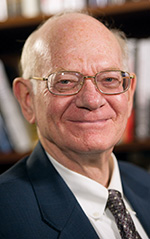
Ronald E. Neumann, the former U.S. ambassador to Algeria, Bahrain, and Afghanistan, is president of the American Academy of Diplomacy. These views are his own and in no way represent Academy positions.
When sharing or linking to FSJ articles online, which we welcome and encourage, please be sure to cite the magazine (The Foreign Service Journal) and the month and year of publication. Please check the permissions page for further details.
Read More...
- “Fostering a Professional Foreign Service” by Ronald E. Neumann, The Foreign Service Journal, July-August 2012
- “Working to Strengthen U.S. Diplomacy” by Ronald E. Neumann, The Foreign Service Journal, December 2018
- “The Diplomat and the State” by Christopher W. Smith, The Foreign Service Journal, May 2020