What’s Wrong with the Ben Franklin Fellowship?
Speaking Out
BY ERIC RUBIN
Speaking Out is the Journal’s opinion forum, a place for lively discussion of issues affecting the U.S. Foreign Service and American diplomacy. The views expressed are those of the author; their publication here does not imply endorsement by the American Foreign Service Association. Responses are welcome; send them to journal@afsa.org.
A lot has changed at the State Department and in the Foreign Service since President Donald Trump was inaugurated in January 2025. One of the most significant developments is the rise of the Ben Franklin Fellowship (BFF).
The fellowship was founded in 2024 by a group of retired and active-duty Foreign Service officers with the notion that the State Department, and specifically the Foreign Service, had become “woke” and that DEIA (diversity, equity, inclusion, and accessibility) efforts had led to a decline in meritocracy and the imposition of a liberal-left orthodoxy among career employees, both Civil Service and Foreign Service.
Initial funding sources for the BFF are opaque and unclear. We know that the BFF received a Heritage Foundation Innovation Award in 2025. Whether it has received additional funding from Heritage or from Heritage’s billionaire donors is not publicly disclosed.
What is clear is that with the inauguration of President Trump for a second term in January 2025, the BFF moved forward with official sanction to become not only a major player inside and outside State but within a few months to become the only employee organization permitted to function at all: The Trump administration banned all other employee organizations and unions from operating at State.
The recall of at least 29 serving career ambassadors right before Christmas, with no public announcements and no explanation, leaves more than 100 U.S. ambassadorships vacant around the world, furthering the perception that it is no longer enough for senior career employees to (as always) avoid partisan politics and carry out the policies established by the president to the best of their ability.
While the administration has refused to acknowledge any kind of political test for career officials, it has added “fidelity” to the Foreign Service promotion precepts and encouraged the perception that only political supporters of the president will receive nominations to high-level positions.
Official Relationships Canceled
The Thursday Luncheon Group was founded in 1973 as a discussion group supporting Black Americans in the Foreign Service and the foreign affairs community. It was followed by more than a dozen other employee organizations, including the Disability Action Group (DAG), Gays and Lesbians in Foreign Affairs Agencies (glifaa), Executive Women @ State, Hispanic Employees Council of Foreign Affairs Agencies (HECFAA), and the Christian employee group GRACE (the first faith-based group formed at State in 2018).
All these groups had official recognition and a modicum of support from State. When Trump took office for a second time, the administration pulled recognition for all the employee organizations and banned them from using any State Department facilities. Some have worked to continue their efforts “off-campus,” and AFSA offered its headquarters for meetings.
Meanwhile, more than 50 years after their official recognition in bipartisan legislation passed by Congress and signed by President Richard Nixon in 1972, the three officially recognized unions at the State Department also lost recognition.
With the stroke of a presidential pen, the American Foreign Service Association (AFSA, for members of the Foreign Service), the American Federation of Government Employees (AFGE, for members of the Civil Service), and the National Federation of Federal Employees (NFFE, for civil servants in the Bureau of Consular Affairs) were stripped of official recognition.
Left standing after the cancellation of more than a half-century of official arrangements and cooperation was the Ben Franklin Fellowship.
A Dramatic Rise
BFF has become the only de facto employee organization of the U.S. Department of State. A year after the president’s inauguration, it functions as the equivalent of a Communist Party cell in Soviet government ministries.
Membership is not required to maintain employment, but those with ambition and aspirations for advancement may conclude that joining BFF is the ticket to future opportunities. The public endorsement of BFF membership for active-duty employees by Deputy Secretary of State Christopher Landau, a BFF member, has sent a very clear signal.
This was on display during the official 2025 State Department awards ceremony in May. DACOR was disinvited from presenting their annual Foreign Service Cup at the ceremony, a long-standing tradition.
We must stand up for the vision of our Foreign Service being representative of our country in every respect.
Deputy Secretary Landau chaired the ceremony, where he proudly declared himself a member of BFF. He further urged active-duty employees to join BFF before introducing Philip Linderman, recipient of the department’s highest award, the Director General’s Foreign Service Cup. Linderman, a retired FSO, is a co-founder of BFF and its current chair.
In his speech, Linderman denounced the impact of DEIA policies on the composition of the Foreign Service and urged both active-duty employees and retirees to join the BFF. This has been accompanied by a series of highly partisan columns posted on the group’s website, some by active-duty members of the Foreign Service and Civil Service.
Since then, State has hosted several joint activities with BFF, including recruitment events, significant in light of the fact that in 2025, State shut down the entire Diplomats in Residence program as well as the entire recruitment office in the Bureau of Personnel and Training at State.
Troubling Realities
There are many troubling and problematic aspects of BFF’s rise to prominence at State and in the Foreign Service.
Political exclusivity. As noted previously, all employee organizations and unions lost recognition and were banned from State Department facilities. Only the BFF has been allowed to use department facilities for meetings and events. The Deputy Secretary of State and many other senior officials are proud members.
The message could not be more clear: If you want to survive and thrive at State, you should join the BFF and conform your personal politics to its partisan agenda, which tracks loosely with the Trump administration’s agenda. This is historically unprecedented and represents a serious surge in politicization of the workplace.
Leadership complicity. I don’t see how the Deputy Secretary and other senior officials can join BFF and then say that membership is voluntary and will have no impact on career prospects and advancement. That is clearly not the case.
Politicization. Several senior active-duty officers who are members of BFF have published op-eds or columns praising and supporting President Trump’s domestic political agenda on issues such as immigration enforcement. This is unprecedented. Examples include a currently serving career U.S. ambassador publishing an article denouncing DEIA and a currently serving career official publishing articles under a pseudonym calling for mass deportations and increased travel restrictions on certain countries.
Career federal employees have traditionally avoided involvement with domestic political issues, not just because of the Hatch Act but also because the Foreign Service has traditionally avoided domestic politics, which could complicate the obligation of career employees to work for every administration, which they take an oath to do.
Antimeritocracy. The BFF claims that “meritocracy” was harmed by DEIA efforts before January 2025. But in the new model, merit is overshadowed by political allegiance to the president and association with the BFF and its ideology. Our history going back to the 19th century reminds us that politicization is usually the enemy of merit and capability.
De-diversification. BFF members claim that they support a pure vision of meritocracy and represent everyone who shares it. But BFF membership is overwhelmingly white and male. It is not unreasonable for critics to say that the BFF’s focus on “meritocracy” is really about returning white men to exclusive leadership roles.
Rejection of one’s own institution. BFF members tend to be publicly dismissive of the U.S. Foreign Service and its legacy. To be sure, there is plenty of room for criticism of the status quo, and many of us have shared it.
But the overall tone and viewpoints of members of the BFF are rife with hostility toward the Foreign Service and its members. Turning one’s back on the institution and the colleagues one has served alongside is neither constructive nor attractive.
Recruitment bias. This administration is unilaterally revamping the Foreign Service entrance process, without transparency on the process and without consulting with AFSA. State is requiring all candidates who had successfully passed all exams and were on the register before the change in the Foreign Service Officer Test (FSOT) to retake the new exam as amended. Candidates who have had the rules changed retroactively after successfully completing the application process will in many cases abandon their career aspirations with great disappointment and dismay. New applicants may well believe that there is a political component to applying to join the Foreign Service (whether or not there actually is).
Blurred lines. The long-standing tradition that career employees do not engage in partisan politics or endorse controversial political positions outside their work responsibilities was not only a response to the Hatch Act and its prohibitions.
It has long been understood that for career federal employees to maintain a long-term professional career, which provides our country with experience, knowledge, and demonstrated ability, it was essential that those employees avoid getting entangled in partisan politics.
The active-duty members of BFF have chosen to align themselves with the politics of this president and administration. When the administration changes, they are going to find themselves in a very awkward and disadvantaged position.
What Now?
BFF and its current role in the State Department and Foreign Service is a reality, unlikely to go away before the end of this administration. That said, it is important for all of us to stand up and defend the nonpartisan, apolitical tradition of the U.S. Foreign Service, now 102 years old in its current form.
We must reject the notion that senior officials, from the Deputy Secretary of State on down, can urge career employees to associate themselves with one side of the political divide in our country in order to advance their careers.
We must stand up for the principles of diversity and inclusion, even while recognizing that some previous efforts went off track and provoked a backlash. In that regard, we must stand up for the vision of our Foreign Service being representative of our country in every respect.
And we must reject the notion that meritocracy somehow means restoring white men to their position of privilege and domination.
We also must do what we can to remind new members of the Foreign Service of the importance of staying out of politics and serving the administration in office without fear or favor. Let’s have confidence in our integrity, our traditions, and our people.
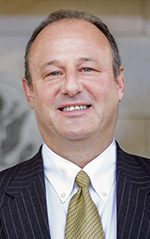
Eric Rubin joined the State Department Foreign Service as a political officer in 1985 and retired in 2023. He served in Honduras, Ukraine, Thailand, Russia, and Washington, D.C., and as U.S. ambassador to Bulgaria from 2016 to 2019. He was president of AFSA from 2019 to 2023. The views expressed here are solely those of the author.
When sharing or linking to FSJ articles online, which we welcome and encourage, please be sure to cite the magazine (The Foreign Service Journal) and the month and year of publication. Please check the permissions page for further details.
Read More...
- “Presidents and Bureaucrats” by Dean Rusk, The Foreign Service Journal, May 1973
- “Back to the Spoils System?” by Eric Rubin, The Foreign Service Journal, March 2023
- “At the Breaking Point,” Report of the American Foreign Service Association, December 2025

Related Links
Featured Content from This Issue:
FOCUS ON NUCLEAR SECURITY
- The Nuclear Security Summits: Keeping the World Safe from Nuclear Terrorism
- Negotiating Nuclear Security: A View from the First Trump Administration
- A Brief History of U.S.-China Nuclear Diplomacy
- Responding to the Fukushima Nuclear Accident: U.S. Assistance to Japan
- Is Nuclear Testing Needed?
FEATURES
FS HERITAGE
RETIREMENT SUPPLEMENT
PERSPECTIVES
- President’s Views: Toward Common Goals
- Speaking Out: Our Professional Foreign Service Is in Danger
- Speaking Out: What’s Wrong with the Ben Franklin Fellowship?
- Reflections: Did Wyatt Earp Smuggle a Puppy into Sweden?
- Local Lens: Ben Nevis, Scotland
DEPARTMENTS
AFSA NEWS