
Did Wyatt Earp Smuggle a Puppy into Sweden?
Reflections
BY BEATRICE CAMP
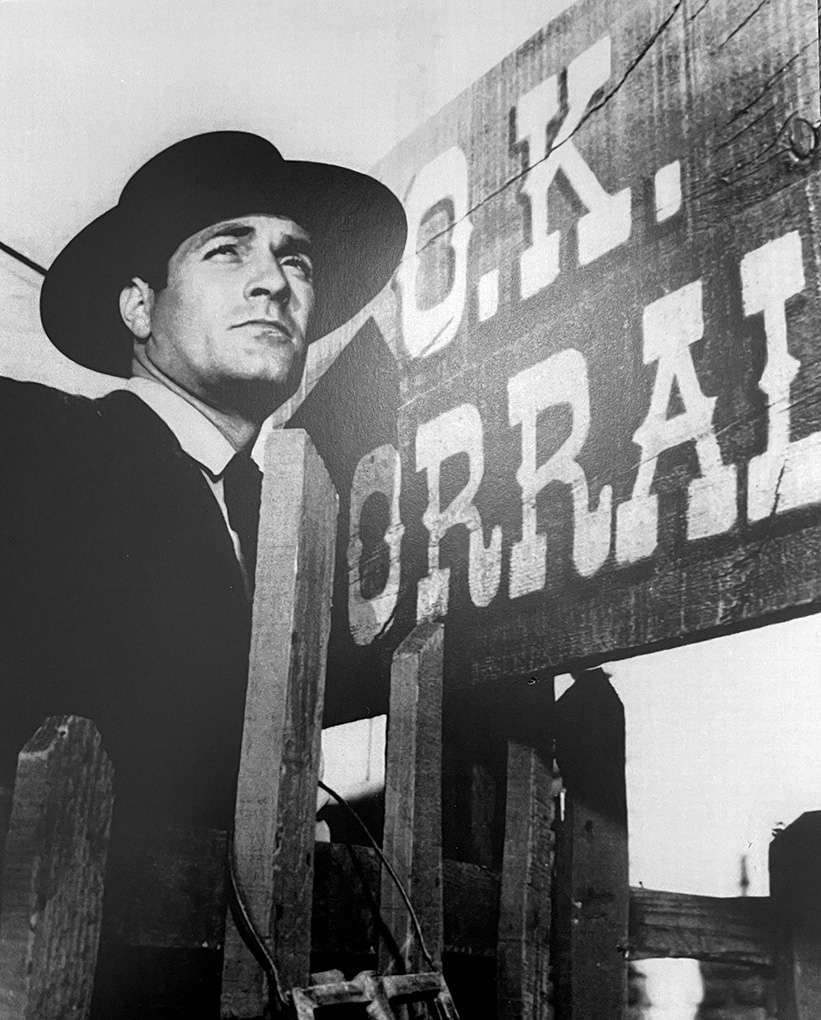
Publicity photo of Hugh O’Brian as Wyatt Earp given to the author in 1991.
Courtesy of Bea Camp
Celebrity visitors can be both a benefit and a hazard of Foreign Service life. Some are sponsored by the U.S. government (USG) to reach audiences abroad, while others fall into embassy laps for a variety of reasons and results.
Sometimes our role can feel a bit surreal, which I experienced escorting “Coal Miner’s Daughter” actress Sissy Spacek to the decidedly not-glamorous Beijing Film Studio as part of our nascent cultural engagement with the People’s Republic of China in 1985.
Some visitors are a delight, such as a pre-senatorial Tammy Duckworth, who passed around her prosthetic arm to an audience of children with disabilities at a school in Chiang Mai, Thailand, in 2019.
Some can be both irascible and inspiring, as Betty Friedan revealed on a USG-sponsored visit to Hungary in 1998. And some are trouble that requires embassy intervention, such as the time a consular colleague was dispatched to tell Elizabeth Taylor she had to relinquish the endangered gibbon she was transporting on the Forbes yacht docked on the Chao Phraya River in Bangkok in 1988.
And yet, who can resist a celebrity? As a childhood fan of the TV series “The Life and Legend of Wyatt Earp,” based on the legendary lawman of the old West, I was thrilled to learn that the lead actor was coming to Sweden with a group of American students.
Hugh O’Brian, who portrayed Earp in the 1955–1961 popular TV show, was also the founder of the Hugh O’Brian Youth Leadership Foundation (HOBY), a nonprofit youth leadership development program for high school students.
After guiding a group of such students through the USSR in 1991, O’Brian had contacted the U.S. embassy in Stockholm for a briefing for the group. I quickly volunteered.
I was more than happy to talk to the high school students and meet my childhood hero. To prepare I subjected our clueless Swedish staff to renditions of the Wyatt Earp theme song.
And I bought bags of M&Ms and chips for the American kids I imagined would be starved for such tastes of home after their sojourn in the Soviet Union.
My offerings were indeed appreciated, and the late-afternoon briefing went well. After bidding the group goodbye, I changed into my biking-home clothes and unlocked my bike from the embassy fence. At that point my duty phone rang.
Arriving at the customs office—now in my role as that week’s duty officer—I learned that my hero had been charged with smuggling a dog into Sweden, which had a strict six-month quarantine for any animals brought into the country. O’Brian contended that he had bought the puppy in question on the dock in Stockholm, after disembarking off the ferry from Tallinn in Estonia.
Given that Sweden is not a country with many stray animals, especially not ones for sale to someone stepping off a boat in Stockholm, this story was hard to credit.
While customs officials went to the hotel to interview the students, I sat in the office with O’Brian, who plied me with lipstick and pens, trinkets that the group had brought along to gift at meetings in the Soviet Union.
Did Wyatt Earp smuggle a puppy into Sweden? I don’t know what the leadership participants told the Swedish custom officers, but it was agreed that O’Brian would leave the next morning with the students, the puppy, and no charges.
I recorded the incident in the duty book as assistance to an American citizen. Although my fanship suffered a blow, the theme song still rings in my ears.
Beatrice Camp’s Foreign Service career took her to China, Thailand, Sweden, and Hungary, in addition to Washington, D.C., assignments at the U.S. Information Agency, the State Department, and the Smithsonian Institution.
When sharing or linking to FSJ articles online, which we welcome and encourage, please be sure to cite the magazine (The Foreign Service Journal) and the month and year of publication. Please check the permissions page for further details.

Related Links
Featured Content from This Issue:
FOCUS ON NUCLEAR SECURITY
- The Nuclear Security Summits: Keeping the World Safe from Nuclear Terrorism
- Negotiating Nuclear Security: A View from the First Trump Administration
- A Brief History of U.S.-China Nuclear Diplomacy
- Responding to the Fukushima Nuclear Accident: U.S. Assistance to Japan
- Is Nuclear Testing Needed?
FEATURES
FS HERITAGE
RETIREMENT SUPPLEMENT
PERSPECTIVES
- President’s Views: Toward Common Goals
- Speaking Out: Our Professional Foreign Service Is in Danger
- Speaking Out: What’s Wrong with the Ben Franklin Fellowship?
- Reflections: Did Wyatt Earp Smuggle a Puppy into Sweden?
- Local Lens: Ben Nevis, Scotland