Off-Road with the Foreign Service
BY NOAH E . ROSE
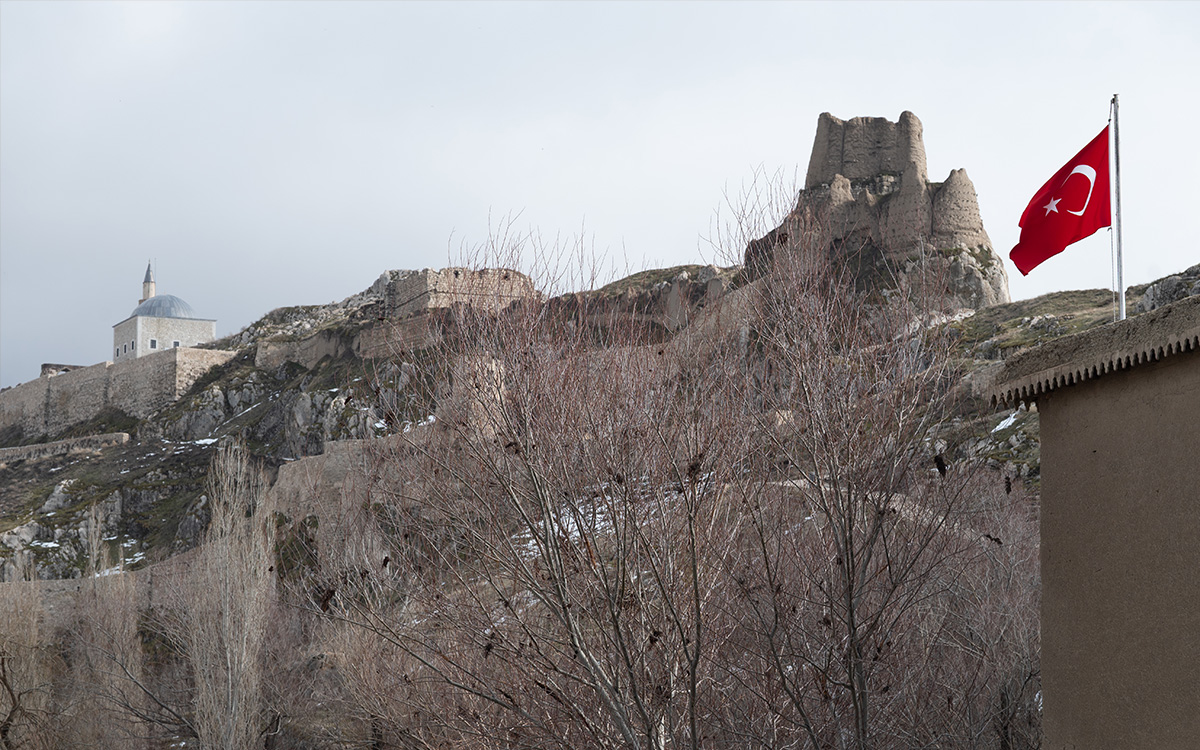
Van Citadel, or the Fortress of Van, is a massive stone fortification built atop a steep bluff in far eastern Türkiye by the kingdom of Urartu during the 9th to 7th centuries B.C.
Noah Rose
I arrived in Ankara in early 2024 for my first tour brimming with excitement and uncertainty. Joining the U.S. Foreign Service had been a childhood dream, and after a year at the Foreign Service Institute, I had left all my friends and family for this assignment.
One month in, restless to see more of Türkiye, I booked a last-minute flight to Van—in eastern Türkiye, only an hour’s drive from the Iranian border. I reached my gate at Ankara Esenboga Airport early and observed that nearly every other passenger was dressed in unfamiliar conservative, religious attire.
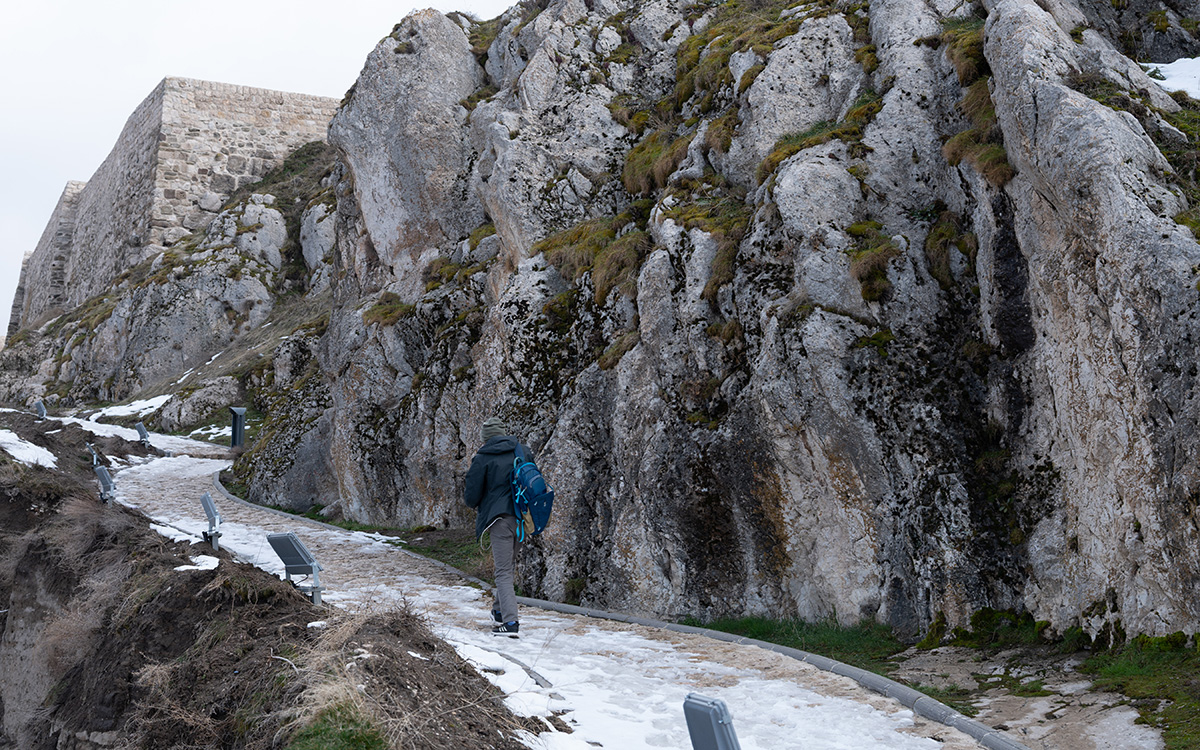
My hiking buddy, Yasar, led the way up the steep, icy path.
Noah Rose
Noah Rose
In Van, I asked the front desk to call a taxi. Minutes later, Osman, who would become both driver and guide, pulled up. After he made a call from the taxi, I asked, “Arapca mi konusuyorsun [Are you speaking Arabic]?”
“Yok, Kürtce [No, Kurdish],” he answered. I later learned that Van was 80 percent Kurdish; the Kurds were a group of people who spoke a language I had never heard before.
As we explored the city, a pattern emerged: almost every local I met, having encountered few foreigners other than Iranians, opened with “Iranli misin [Are you Iranian]?” I learned to laugh and reply, “Tam tersi—Amerikaliyim [Just the opposite—I’m American].”
That answer earned me two companions for a hike up to the ruins of a castle, built around 800 B.C. by the Urartu Kingdom. While I was paying the entry fee, another visitor, Yasar, introduced himself and decided to join me.
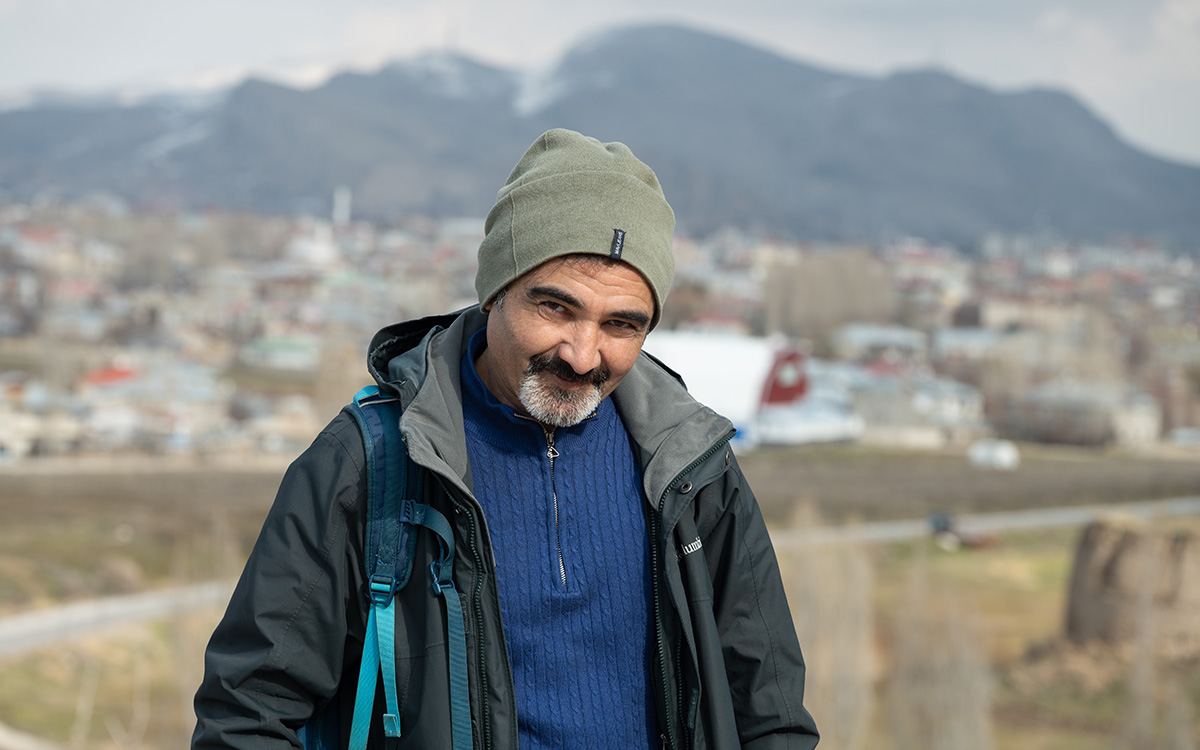
In the warm, unguarded hospitality I would come to recognize as characteristically Turkish, he explained that he had endured a 15‑hour bus ride from Istanbul as part of his job inspecting hospitals. We traded stories as we climbed.
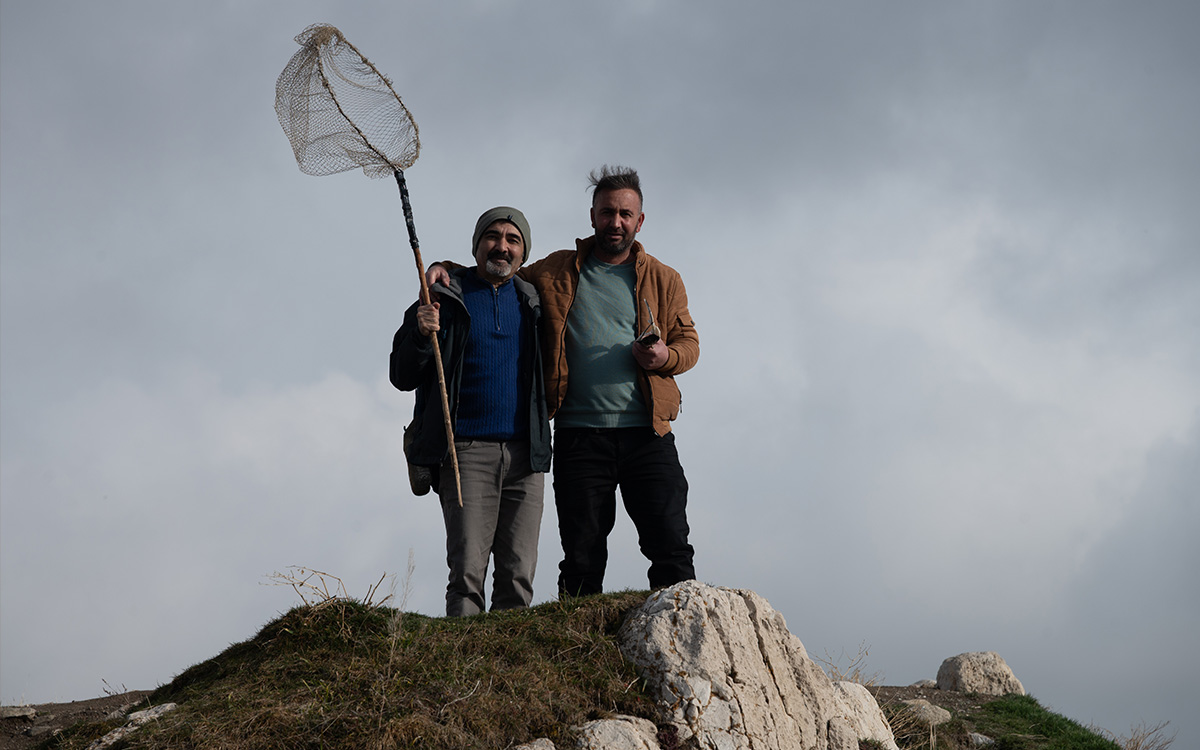
We met Mehmet, a pigeon catcher, who posed with Yasar and volunteered to accompany us, net and pigeon in tow.
Noah Rose
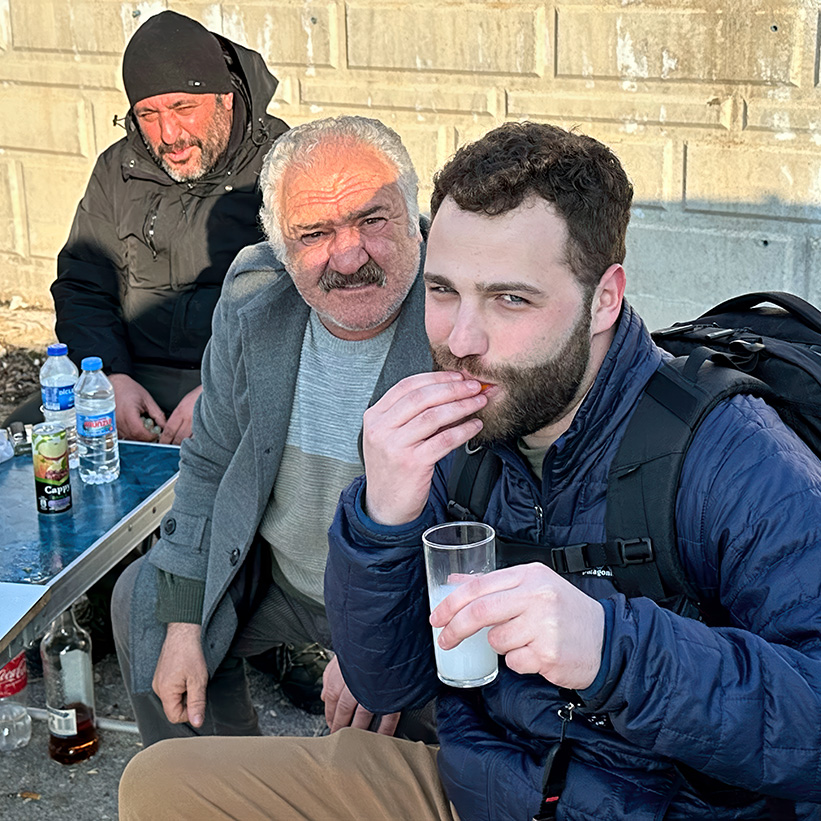
As I waited for my ride in the parking lot, a young man politely asked me to photograph him and his friends. By the time Osman arrived, I had joined their lively picnic and invited Osman to do the same.
Noah Rose
Rounding a bend, I spotted a man standing perilously close to the cliff edge, gripping what looked like a long pole. Half concerned, half intrigued, I pointed him out to Yasar. Bounding ahead, Yasar learned the stranger—Mehmet—was wielding a large net to catch pigeons roosting in the rock face.
By way of proof Mehmet extended a hand clutching a still‑flapping bird. (I would later learn that millennia‑old pigeon‑keeping traditions still thrive in eastern Türkiye.) Mehmet volunteered to join our little hiking party, net and pigeon in tow.
After descending, the three of us exchanged numbers and parted ways.
I texted Osman for a pickup and waited in the parking lot. Within 30 seconds a young man who had been loitering behind some cars approached. Fresh from State Department security training, I braced for a mugging.
Instead, he politely asked if I would photograph him and his friends. They had set up a makeshift picnic—fruit, soda, and what I soon discovered was homemade whiskey and raki, Türkiye’s version of Greek ouzo.
When I asked one picnicker whether he liked America, he grinned and replied, “Only when I’m drunk.” Fortunately for me, he was. By the time Osman arrived, I had joined their festivities and invited him to do the same.
Flying back to Ankara, I reflected on this first foray outside the capital. A little local language and a lot of local hospitality had transformed what I expected to be a simple weekend outing into an adventure that got me hooked on exploring cultures I hadn’t dreamed of.
I decided to seek those conditions whenever possible for the rest of my tour—and, I hope, for the rest of my career.
Noah E. Rose is a political officer serving in Ankara and is looking forward to his next assignment as a consular officer in Montreal.
When sharing or linking to FSJ articles online, which we welcome and encourage, please be sure to cite the magazine (The Foreign Service Journal) and the month and year of publication. Please check the permissions page for further details.