Here’s how to find the perfect American-style summer camp for your kids—outside the United States.
BY MELISSA MATHEWS
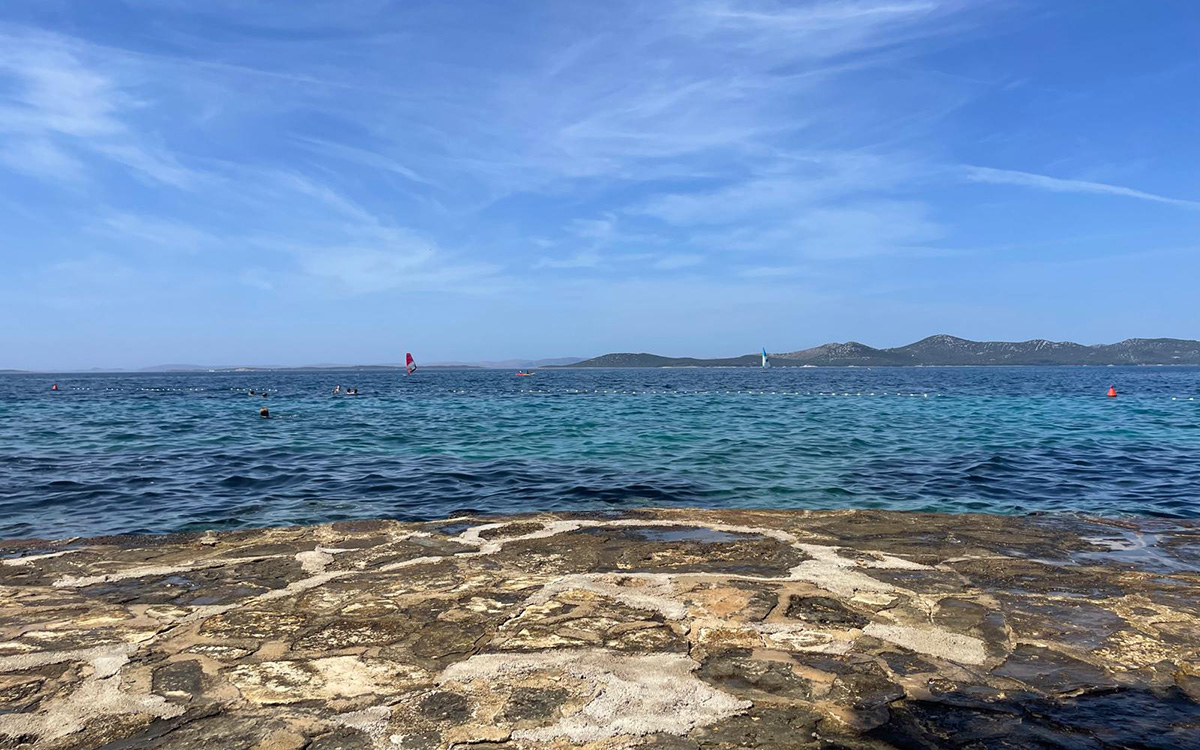
Looking out at the Adriatic Sea.
Melissa Mathews
Each summer across the United States, kids head off to sleepaway camp. For many families, it’s a rite of passage—and one that many Foreign Service families pursue at great time and expense, flying kids across continents and oceans with overstuffed duffle bags, seams bulging with swimsuits, sleeping bags, and hiking boots.
But what if there were a better way?
Over the past couple of decades, a number of American-style summer camps have sprung up overseas, serving both local families and expat ones. One of the best known is Camp California, on the shores of the Adriatic in Croatia. Originally envisaged as an English-immersion experience for Croatian kids, it now serves as a destination for children from more than 40 countries.
“I had always gone to summer camp. It was the highlight of my summer,” said Leigh-Ellen Murray, a Foreign Service parent, who also worked at summer camps as a young adult. “For me, it’s really important that kids have age-appropriate and safe ways to experience life away from their parents.”
Camp California is based on the grounds of a Euro-camping style resort. Campers sleep in bunks in off-grid huts, steps from the deep blue water. They eat in the resort dining hall along with vacationers, but otherwise enjoy their own sports and recreation facilities, including a pier, boats, and arts and crafts pavilion.
For each week of a two-week session, campers select from a menu of activity options to build their schedule—everything from sailing and paddleboarding, to tennis and soccer, to drama.
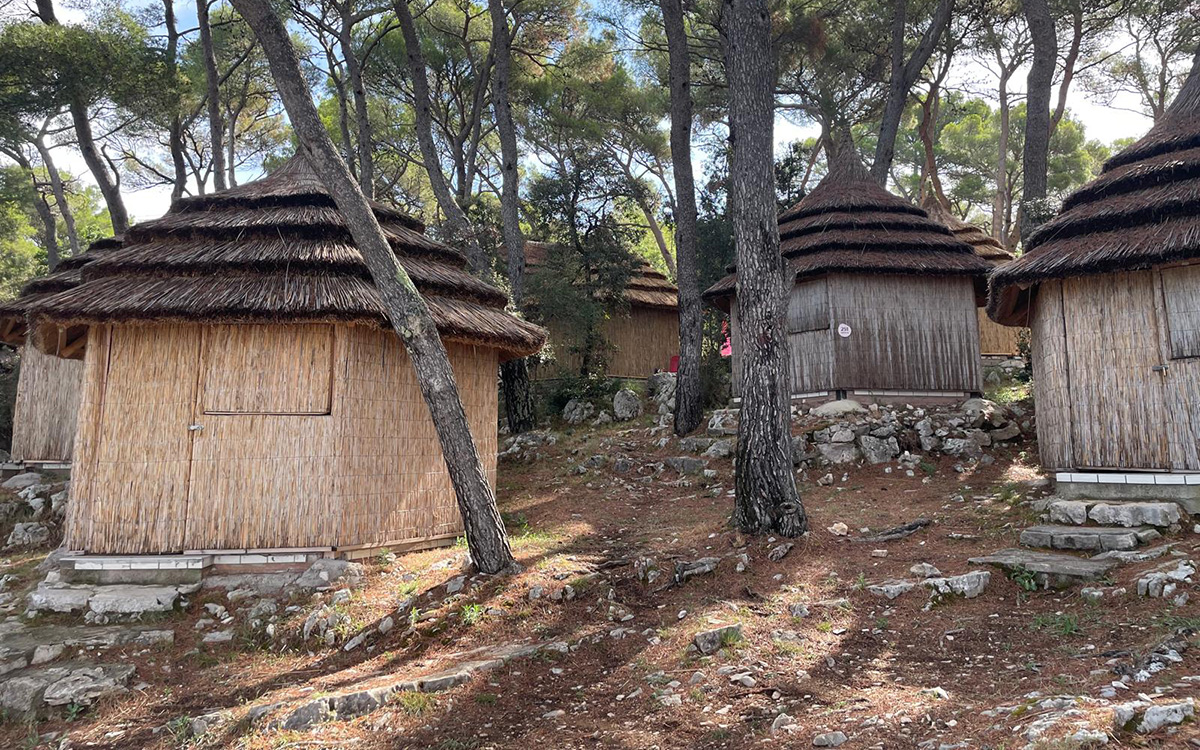
Huts by the beach for campers at Camp California in Croatia.
Melissa Mathews
Considerations for Parents
“My first consideration as a parent is how safe and well run the camp is, and if I feel good about it,” Murray said. “I look for programs that will be a good fit for them, whether it’s well organized and how the camp communicates.”
The International Camp Fellowship lists dozens of summer residential camps overseas. Here are some considerations for families seeking a traditional summer camp experience while posted abroad.
Location. One of the advantages of an international summer camp is to keep kids within driving distance of parents in case of emergency. For that reason, many Foreign Service parents will choose a camp in the country or region where they live. Additionally, campers looking to build foreign language skills may choose a camp in a country where they can get an immersive experience.
Cost. Summer camp fees run the gamut, depending on locality and programs offered. As a rule, you should budget for at least $1,000 a week. Camp California, for example, costs about $2,300 for a two-week session for summer 2026. Specialized activities may cost more.
Safety. Following the Texas summer camp disaster over July 4 weekend last summer, safety is top of mind for any parent. While accreditation or association memberships can be a good indicator of robust safety practices, there is no substitute for asking questions, meeting camp leaders, and inspecting facilities, if you can. In addition, prep your camper to be their own advocate, ensure their swimming skills are strong, and even establish a “safe word”—something Murray’s family did but fortunately never had to use.
“Go with your gut when choosing a summer camp,” Murray says. “You know your kid, and what might be right for one might not be the best fit for yours.”
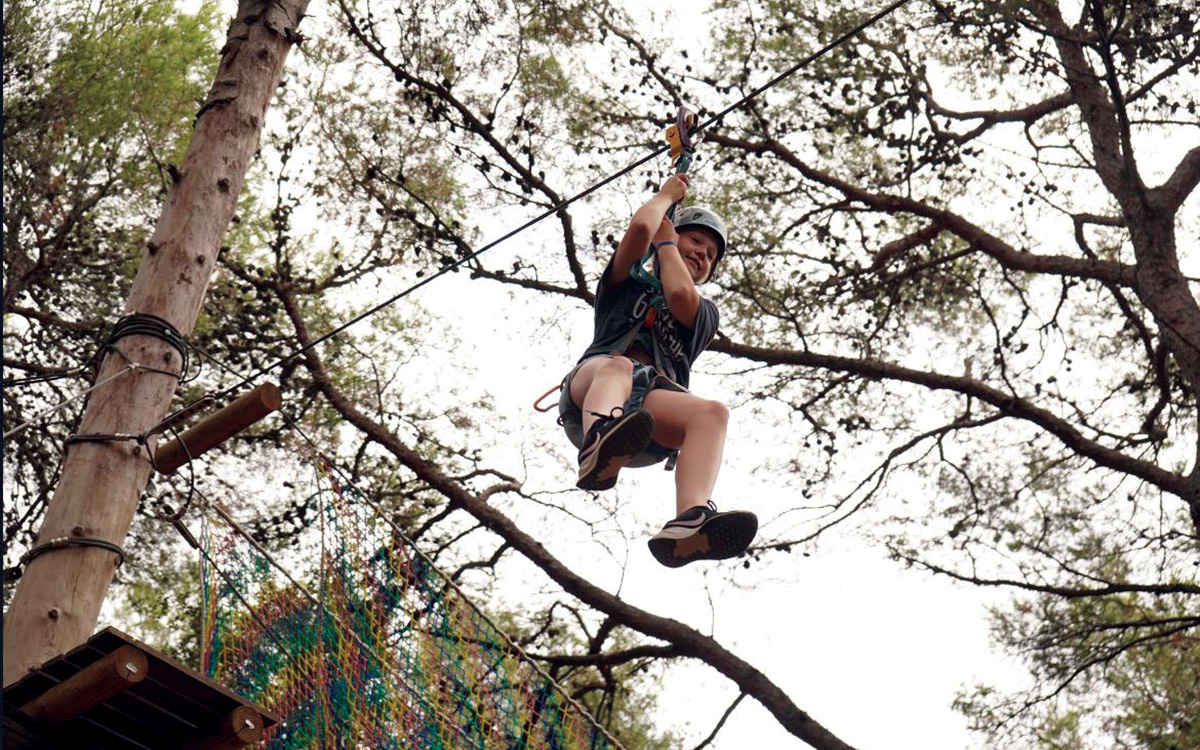
A camper ziplining in Croatia, 2025.
Camp California
Teens and Young Adults
While many summer camp experiences are tailored for older elementary and middle school kids, others have programs geared to older teens. Camp California, for example, offers Teen Adventure and Teen Sailing programs; in the latter, kids spend the first week learning to sail and then spend the second living on a boat.
Older kids can also find summer jobs as camp counselors or activities staff. Minimum age and qualifications vary, but CCUSA is one place high school and college students can start their search for international summer work adventures, including at camps. As in the U.S., lifeguarding and other skill certifications are in demand.
Creating Friendships That Last
For internationally mobile third-culture kids, summer camp can provide stable friendships they can return to year after year. They can also serve as a meet-up point for friends from a previous post, helping kids to maintain relationships across the miles.
Our daughter attended Camp California for a couple of summers while our family was posted to Vienna. It was about a six-hour drive to Pakostane, Croatia, but we also took advantage of a shuttle service offered from Ljubljana, Slovenia, which cut our drive to about four hours each way.
Both summers, our daughter had a blast, and I always felt confident that she was having a good experience. Phones and other electronic devices were left at check-in, but campers had the opportunity to send handwritten letters, which were scanned and forwarded to parents by email.
As a rule, you should budget for at least $1,000 a week.
Camp photographers posted hundreds of photos daily, so while she felt far away from us, we never felt too far from her. When she got sick in the middle of the night, the “Camp Mom,” a nurse, took her to the wellness hut and provided us frequent updates on how she was feeling.
Both summers, she met up with a friend from a previous post, helping to maintain an important relationship. Camp gave them something to text about throughout the year, especially when it was time to choose activities or think about what to pack.
When that friend’s family—Murray’s family—was eventually posted to Vienna, the girls were able to pick up their friendship like no time had passed at all. For our two daughters, a shared summer camp experience helped a relationship flourish over three Foreign Service tours, and counting.

Melissa Mathews is a corporate communications professional and a former journalist. Her family has been in the Foreign Service for more than 18 years, serving in Guatemala, Saudi Arabia (twice), Jordan, Austria, and Jamaica.
When sharing or linking to FSJ articles online, which we welcome and encourage, please be sure to cite the magazine (The Foreign Service Journal) and the month and year of publication. Please check the permissions page for further details.
Read More...
- “Growing Up with A World View: Nomad Children Develop Multicultural Skills” by Norma M. McCaig, The Foreign Service Journal, September 1994
- “From Refugee to Camper to Diplomat: Why Summer Camp for FS Kids” by Tibor Nagy, The Foreign Service Journal, March 2022
- “Traditions and Community: Summer Camp for FS Kids” by Jessica Powley Hayden, The Foreign Service Journal, October 2024