Speaking Out
BY TROY FITRELL AND JAMIE BAY NISHI
Speaking Out is the Journal’s opinion forum, a place for lively discussion of issues affecting the U.S. Foreign Service and American diplomacy. The views expressed are those of the author; their publication here does not imply endorsement by the American Foreign Service Association. Responses are welcome; send them to journal@afsa.org.
A “tumultuous” year doesn’t begin to describe the impact on lives, livelihoods, and global health initiatives of the dismantling of USAID, the pulling back from multilateral partnerships, and budget cuts across public health and research. The global health community’s cry that these disruptions have cost lives and set back health initiatives for years is not an understatement: We cannot easily replace USAID’s expertise or that of the global health implementer community.
It is not enough to simply shift the burden onto fragile countries themselves or pass the responsibility solely to international and regional organizations. If we cannot do things as we did, we must plan to conduct health diplomacy in a new way. Even with decreased U.S. funding, the State Department must protect and advance the gains already achieved in global health while implementing the administration’s policies.
State’s Bureau of Global Health Security and Diplomacy recently released its strategy for the new era of U.S. contributions to global health programming, which is intended to empower partner country governments, improve health outcomes, and promote durability and self-reliance in local health systems while ensuring U.S. health security.
We appreciate our colleagues’ efforts, noting—as they did on the release of the strategy—that there is much left to do to implement the broad strategic approach. We hope our suggestions in this piece will complement the strategy and keep us all directed toward better global health outcomes.
An Opportunity for Health Diplomacy
Going forward, chiefs of mission and their country teams will need greater understanding of the complexities of health challenges in the countries where they serve as they inherit the responsibility to engage continually on health, a task previously owned by USAID counterparts.
They must advance bilateral conversations with significantly diminished resident expertise. Further, the State Department will need to quickly acquire the know-how for contract and grant authority to fill gaps that are deemed priorities in terms of U.S. strategic interests.
There is appropriate concern within the global health community about State Department generalists’ ability to absorb global health programmatic activities, but there is a difference between implementing health programming and integrating global health into the overall conduct of diplomacy.
The State Department will not be able to advance its work without engaging technical health expertise, but at the same time the department has a fresh opportunity to collaborate with partner countries to consider health activities within a broader socioeconomic context.
Within the health arena, State can now reshape activities formerly undertaken by USAID’s Global Health Bureau and consider health impact outside siloed efforts run largely through disease-specific vertical programs.
Integrated Approaches vs. Silos
For years, and across political administrations, global health stakeholders have noted the need for integrated approaches to delivering health outcomes but often felt constrained by long-established programs aligned to specific appropriated funding lines.
Traditionally, there were eight health-area silos: HIV/AIDS, largely facilitated through PEPFAR; the President’s Malaria Initiative (PMI), jointly facilitated through USAID and the Centers for Disease Control and Prevention (CDC); Tuberculosis; Maternal and Child Health (MCH); Family Planning/Reproductive Health; Nutrition; Neglected Tropical Diseases; and Global Health Security.
But today, if a country indicates that they are seeing better HIV outcomes thanks to decades of PEPFAR support, and their top concerns have shifted to maternal health and malaria, there is an opportunity to turn to other areas of U.S. expertise in which a ministry could most use support.
A reframed approach will also open new doors to more patient-centered approaches to health and programmatic efficiencies. If a pregnant woman presents at a clinic feeling ill, instead of offering a diagnostic for one disease, testing could be offered for a suite of diseases or health concerns, to reach a proper diagnosis more efficiently. Though this example appears simplistic, everyone involved in health diplomacy knows such situations are commonplace.
Chiefs of mission and their teams talk to many officials across government, and this interaction will benefit from engaging outside the often-siloed development assistance health dialogues. Shifting from health area verticals to bilateral cross-cutting health programming is a big challenge, but it offers an opportunity to reorient to a nimbler approach that is responsive to constantly evolving health priorities and can, perhaps, ultimately drive better health outcomes.
Building on Solid Foundations
Though some level of reorientation is needed, the State Department should build on the highly effective multisector models for global health already advanced by USAID—for example, the Neglected Tropical Disease (NTD) program. Two decades of U.S. leadership combating 21 NTDs that disproportionately affect the world’s poorest communities through a mass drug administration campaign has achieved remarkable results.
More than 54 countries have eliminated at least one NTD, with 600 million people no longer requiring preventive treatment. These efforts have also served as a powerful example of effective public–private collaboration: Only $115 million annually in government funding has leveraged more than $1.1 billion in donated drugs from pharmaceutical companies.
Similarly, USAID’s Center for Innovation and Impact spent years developing models of sustainable finance for health and models of data-driven health policy. Let’s not allow that work to get lost but leverage it to ensure that unique American expertise in the fields of health innovation and life sciences, philanthropy, academia, and civil society is engaged.
This includes working with the non-health private sector that employs Americans to work in nearly every country in the world and wants to ensure the well-being of their workforces. We have more than 5 million Americans working and living abroad, and improved global health means better access to health care for them as well.
Using Comparative Advantage
In the consolidation at State, U.S. national interests such as epidemiology and the overall detection, management, and control of various emerging infectious disease threats should remain a priority.
Far from being external niche programs, these should become more central and intrinsic to the State Department’s global strategic planning. Part of the United States’ comparative advantage is the ability to rely on the critical interagency expertise that remains following this year’s significant reductions in force.
The Centers for Disease Control and Prevention (CDC) plays a vital role in strengthening global health systems through disease surveillance, outbreak response, laboratory capacity building, workforce training, and pandemic preparedness.
A notable example of successful interagency collaboration was the response to the Ebola outbreaks in West Africa in 2014, when tens of thousands perished, threatening the globe.
The response led to significant investment in national and regional epidemiology, field service capacity strengthening, and creation of the Africa CDC, modeled after the gold-standard U.S. CDC. In 2021, when Ebola reared its ugly head again in a manner similar in scope and distribution to 2014, only a few dozen perished thanks to the new structures the United States created.
Looking to Increased Local Capacity
Significantly, this increased domestic capacity is applicable to the range of emerging infectious diseases—e.g., mPox, Marburg, Lassa fever, Ebola—protecting not only local communities but the entire globe. We are currently watching a new Ebola outbreak unfold in the Democratic Republic of the Congo with little to no U.S. engagement around the response, which is testing bilateral country ties in new ways.
While the United States should maintain some level of bilateral engagement during an emerging infectious disease, increased local capacity aligns with an America First agenda and accesses American comparative advantages.
Decades of U.S. contributions to health implementation programs, public health, and health research have strengthened the capabilities of most countries to facilitate more of this work, and we are at a point where the United States should robustly engage on health diplomacy to have more nuanced dialogue around what will make individual countries and the United States safer, healthier, and economically more secure.
Recommendations
As we consult with countries to design and implement the way forward, based on the administration’s new strategy, we submit the following recommendations to State leadership:
1. Empower and resource posts. Ambassadors and their country teams must absorb the responsibility to map the priorities, integrate the capabilities, and convene and advise stakeholders in host countries. We must recognize that posts do not have this capacity currently and need both the instruction and investment to make it a reality.
2. Have the right operational tools. In the short term, State must rapidly build its contracting authority to be able to issue contracts and grants to support direct global health programmatic work moving forward and, ideally, assign contracting authority to posts. Even with a smaller budget, this capacity is critical.
3. Build on success. Recognizing the essential contributions and successes of PEPFAR, PMI, and the USAID Global Health Bureau, as well as the fact that the world has continued to evolve with new enduring and emerging health challenges, programs should now build on that proven infrastructure and consider multiple health areas concurrently.
4. Persevere with multisector engagement. The State Department and missions should encourage all sectors the United States represents, including the private sector, nongovernmental organizations, academia, and civil society, to advise them on how to drive the best return on investment working with more limited public sector funding, prioritizing capabilities the U.S. can uniquely offer to fill gaps and improve health outcomes.
5. Rely on whole-of-government expertise. The State Department does not have, and never will have, deep technical expertise related to global health. It is imperative that the department reinstate interagency agreements, in particular with the CDC, to have the ability to deploy the best in the U.S. government’s capacities to tackle health challenges. This is specifically the role of diplomacy versus subject matter expertise.
Underpinning any recommendations to the State Department, congressional appropriators must recognize the new responsibilities and requirements and fund them appropriately. This means preserving and building on PEPFAR’s capacities while concurrently supporting a shift away from siloed funding and offering flexible health funding to achieve maximum impact.
The newly reorganized Bureau of Global Health Security and Diplomacy faces countless challenges. If successful in adopting refreshed and collaborative approaches, we may see strengthened bilateral relationships and improved health outcomes globally.
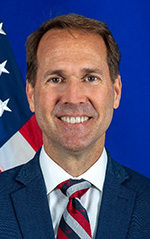
Troy Fitrell retired in September 2025 after 30 years in the U.S. Foreign Service. He led the Bureau of African Affairs through the changes reflected in this article and earlier served as ambassador to the Republic of Guinea, in addition to assignments in Africa, Europe, and Latin America.

Jamie Bay Nishi is the chief executive officer of the American Society of Tropical Medicine and Hygiene, the largest international scientific organization of experts dedicated to reducing the worldwide burden of tropical infectious diseases and improving global health. As a Foreign Service dependent, she grew up in Saudi Arabia, Egypt, France, and Germany between postings back to Washington, D.C.
When sharing or linking to FSJ articles online, which we welcome and encourage, please be sure to cite the magazine (The Foreign Service Journal) and the month and year of publication. Please check the permissions page for further details.
Read More...
- “USAID FSOs Reflect on Global Health Diplomacy” by Maria B. Spadacini, The Foreign Service Journal, May 2017
- “Pandemic Showcases Value of Global Health R&D, While Imperiling its Future” by Jamie Bay Nishi, Global Health Now, January 2021
- “Putting America First by Stopping Outbreaks at Their Source” by Nidhi Bouri, The Foreign Service Journal, July-August 2025